December 16, 2025
10 minutes
Written by
Minah Han
Community News
No items found.
December 16, 2025
10 minutes
Written by
Minah Han
Community News
No items found.

Unlock Your ASL Potential: 5 Strategies for Meaningful Practice

American Sign Language (ASL) is a primary language for many people across North America. Learning ASL is more than developing a new skill; it opens the door to communication without limits and fosters meaningful connection with the Deaf community. ASL is a rich, visual language shaped by unique grammar, expressive nuance, and strong cultural foundations.

People learn ASL for many reasons: personal growth, supporting loved ones, or helping promote accessibility in their communities. Whatever your motivation, consistent and intentional practice builds confidence and independence. Effective ASL learners do more than memorize vocabulary. They immerse themselves in Deaf culture, practice regularly, connect with other signers, use supportive digital tools, and take part in ASL classes and events. Together, these habits create the foundation for long-term fluency and deeper cultural awareness.

A woman and a man sit on a couch facing each other, smiling as they have a friendly conversation in American Sign Language. Both are engaged and expressive, creating a warm, relaxed learning environment.
Photo courtesy of Adobe Stock Images.

1. Immerse Yourself in Deaf Culture

Why It Matters
  • Cultural Insight: ASL is deeply connected to the Deaf community. Immersion helps you understand how signing functions in everyday communication, including pacing, expression, and conversational nuance.
  • Confidence Building: Exposure to fluent signers shows how grammar, facial expressions, and movement work together in real interactions, making it easier to apply new skills.
How to Apply It
  • Watch ASL Content: Explore TV shows, movies, vlogs, and tutorials created by Deaf ASL users. Creators such as The Vich Family, TJ and Kylee, and King Ron provide everyday examples of natural signing, including pacing, expression, and conversational flow.
  • Follow ASL News: Daily sources like The Daily Moth model polished conversational ASL and connect vocabulary to familiar topics, making new signs easier to recognize and retain.
  • Label Your Environment: Place sticky notes with ASL glosses (written sign labels) around your home to reinforce vocabulary through repeated visual reminders.
Real-Life Example

Maria, a project manager, began learning ASL to support a Deaf colleague. She watched Deaf-led vlogs on workplace communication and labeled items around her desk with ASL glosses. As she grew more familiar with signing conventions and cultural expectations, her confidence increased during team discussions, helping her collaborate more effectively.
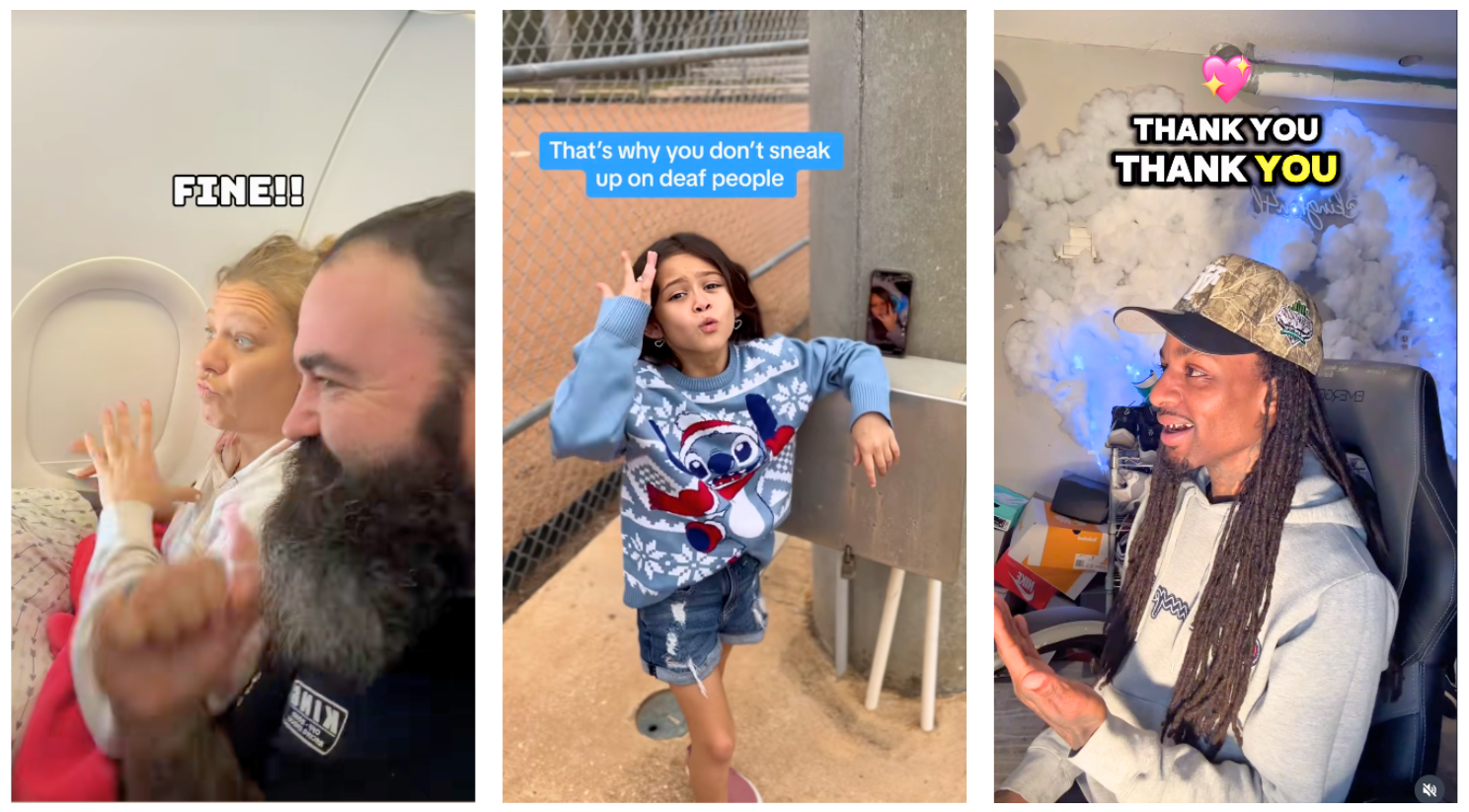
A three-panel collage featuring Deaf ASL creators signing in everyday moments: a couple signing playfully on an airplane, a child signing expressively near a sports field, and a man signing in a home studio with soft lighting behind him.
Screenshots from @TheVichFam, December 8, 2025
@Cargo_Shorts_Dad, December 12, 2025
@KingRon4L, December 15, 2025

2. Practice Regularly and Consistently

Why It Matters
  • Language Retention: Regular practice helps new signs stay familiar and easier to recall.
  • Muscle Memory: Short, frequent sessions build smoother, more confident signing.
How to Apply It
  • Set Realistic Goals: Dedicate 15–20 minutes a day to focused practice. Rotate activities such as fingerspelling, vocabulary review, and short video lessons to stay engaged. Like any language, ASL fluency develops over time.
  • Integrate Practice Into Routines: Look for natural moments to sign. Review vocabulary while preparing meals, fingerspell during short breaks, or practice new signs before bed.
  • Track Your Progress: Use a journal or weekly video log to record milestones. Reviewing earlier entries makes improvement easier to see and keeps motivation high.
Real-Life Example

Michael practiced signing ingredients while cooking dinner, using signs such as “onion,” “cut,” “stir,” and “boil.” Within a few weeks, he found himself signing each step automatically. This simple routine strengthened his vocabulary, built muscle memory, and made ASL a natural part of his day.

3. Find a Language Partner

Why It Matters
  • Interactive Growth: ASL thrives in conversation. Practicing with others strengthens expressive (how clearly you sign) and receptive skills (how well you understand others).
  • Spontaneous Communication: Regular dialogue builds confidence and makes responding in real time feel more natural.
How to Apply It
  • Attend Deaf Events: Visit Deaf coffee chats or local community meetups to practice with native and fluent signers in welcoming settings.
  • Use Online Platforms: Join virtual signing groups and language exchange platforms to stay connected no matter where you are.
  • Work with ASL Tutors: Tutors offer personalized guidance, grammar support, and conversation practice tailored to your goals.
Real-Life Example

Brian met weekly with a partner through an online exchange group. During each session, they practiced introductions, shared short stories, and asked everyday questions. Over time, Brian’s receptive speed improved, and he felt more comfortable signing spontaneously.

Two people sit at a restaurant table, signing to each other while sharing a meal. The man signs with both hands as the woman watches attentively, reflecting a natural ASL conversation in a casual setting.
Photo via Canva.

4. Utilize Online Resources and Apps

Why It Matters
  • Flexible Learning: Digital tools make practice accessible whenever you have time.
  • Diverse Learning Styles: Visual dictionaries, videos, and interactive lessons reinforce skills through multiple formats.
  • Signer Variation Awareness: Exposure to different signers helps you recognize regional signs and natural variations.
How to Apply It

ASL Dictionaries

Tools such as Handspeak and Signing Savvy provide clear demonstrations, regional variations, and example sentences to help you understand signs in context.

Mobile Apps:

  • ASL Bloom: Structured lessons that build foundational vocabulary and everyday communication skills.
  • Intersign ASL: Visual modules introducing practical signs, simple dialogues, and beginner-friendly routines.
  • Lingvano: Bite-sized lessons focused on real-life conversation with guided practice that supports muscle memory.

Video Lessons

Deaf-led YouTube channels, including Dr. Bill VicarsASL University (Lifeprint), offer free, progressive lessons that teach grammar, vocabulary, pacing, and cultural context.

Online Courses

Programs such as Gallaudet University’s ASL Connect and ASL at Home provide guided, self-paced instruction with activities that strengthen expressive and receptive skills.

Real-Life Example

Lena, a new parent, used the ASL at Home course to learn signs for daily routines such as “bath,” “milk,” and “sleep.” The short lessons fit easily between naps and feedings, and she soon felt more confident communicating with her hard-of-hearing toddler.

A woman sits at a bright desk during a video call, smiling as she signs toward her laptop. Papers, a notebook, and a mug sit nearby, creating a focused and welcoming workspace.
Photo via Canva.

5. Attend ASL Events and Classes

Why It Matters
  • Structured Practice: Classes and events provide reliable opportunities to sign with others and receive supportive feedback.
  • Cultural Understanding: Real-world interaction deepens your awareness of Deaf culture and strengthens communication skills.
How to Apply It
  • Take a Formal Class: Enroll in multi-level ASL courses led by Deaf instructors. These classes offer structured lessons, guided grammar instruction, and peer conversation practice.
  • Join Signing Meetups: Attend local or virtual conversation groups that offer a supportive space to practice conversational ASL.
  • Attend Deaf-Led Events: Experience theater performances, storytelling events, film festivals, and cultural workshops. These settings highlight how ASL uses pacing, expression, and movement in dynamic, creative ways.
Real-Life Example

After attending a Deaf storytelling workshop, Priya noticed a meaningful shift in her communication. Watching performers use signing rhythm, facial expression, and body movement to convey grammar and emotion helped her understand how ASL communicates nuance beyond individual signs. When she returned to her weekly signing group, her conversations felt clearer and more expressive.
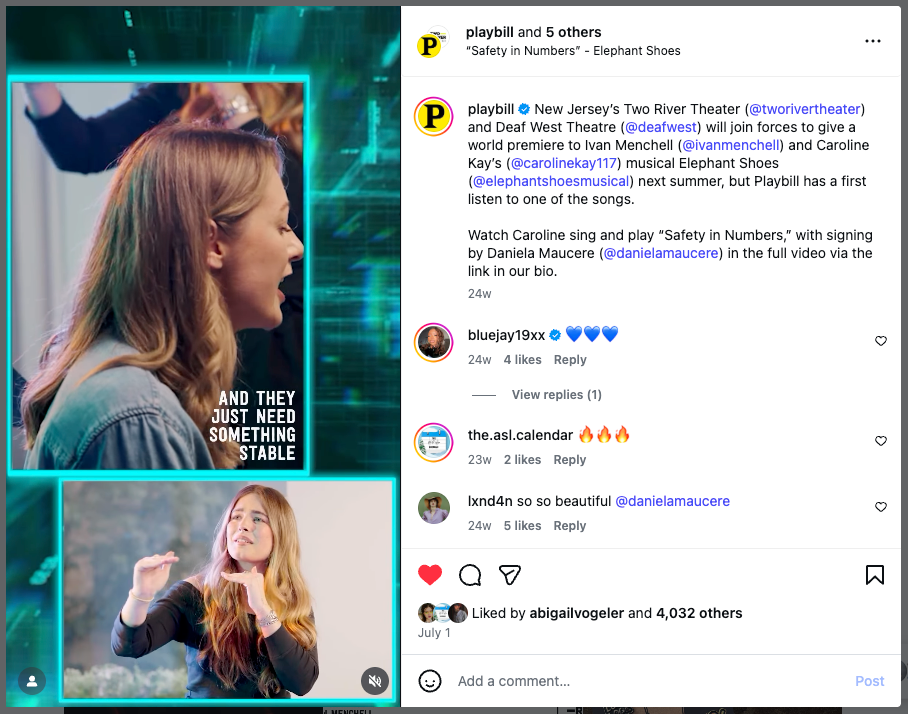
A split-screen Instagram post from Playbill shows two images of a performer: the top image features a woman singing in profile with the on-screen caption “AND THEY JUST NEED SOMETHING STABLE.” The bottom image shows a Deaf signer interpreting the song in American Sign Language against an outdoor backdrop. The caption beside the post announces a collaboration between Two River Theater and Deaf West Theatre for the upcoming musical Elephant Shoes, highlighting that the video features ASL interpretation by Daniela Mauceri.
Screenshot from @DeafWest, July 1, 2025.

Start Your Signing Journey Today

Learning ASL is a meaningful and empowering experience that expands communication and strengthens cultural connection. Ready to begin? Choose one strategy from this guide and commit to it this week. Whether it’s watching a Deaf-led vlog, labeling your environment, or joining a signing group, every step brings you closer to confident communication.

Play
1min

Minah Han

About the author

Minah Han is a marketing professional dedicated to advancing accessible communication solutions for the deaf and hard of hearing community. At InnoCaption, she leverages her expertise in digital marketing and storytelling to amplify the voices of individuals who rely on innovative technologies for everyday conversations. Minah is passionate about bridging the gap between technology and accessibility, helping to drive awareness and education around captioned calling solutions.

Make calls with confidence

InnoCaption provides real-time captioning technology making phone calls easy and accessible for the deaf and hard of hearing community. Offered at no cost to individuals with hearing loss because we are certified by the FCC. InnoCaption is the only mobile app that offers real-time captioning of phone calls through live stenographers and automated speech recognition software. The choice is yours.

Llame con confianza

InnoCaption proporciona tecnología de subtitulado en tiempo real que hace que las llamadas telefónicas sean fáciles y accesibles para la comunidad de personas sordas y con problemas de audición. Se ofrece sin coste alguno para las personas con pérdida auditiva porque estamos certificados por la FCC. InnoCaption es la única aplicación móvil que ofrece subtitulación en tiempo real de llamadas telefónicas mediante taquígrafos en directo y software de reconocimiento automático del habla. Usted elige.