Fabiola Ramirez spent most of her childhood believing she was the only person in the world with hearing loss. Nobody around her had it, and nobody knew there was a community where she would fit. Today she's a communication disorders student at Cal State Fullerton, a Young Adult Ambassador with HLAA's Los Angeles chapter, and a future audiologist. She talked with us about growing up on her own, the friend who taught her not to be afraid, and the moment she realized she was never alone after all.
Before anyone knew you had hearing loss, those first five years, what do you remember?
I made up my own words. My mom says I watched so much Teletubbies that their language basically became mine, even though it wasn't a real one. I could tell I wasn't catching everything my family said, but I didn't understand why, and at that age I didn't think much of it. My mom always felt in her heart that something was different, but for a long time no one believed her.
How did you finally get diagnosed?
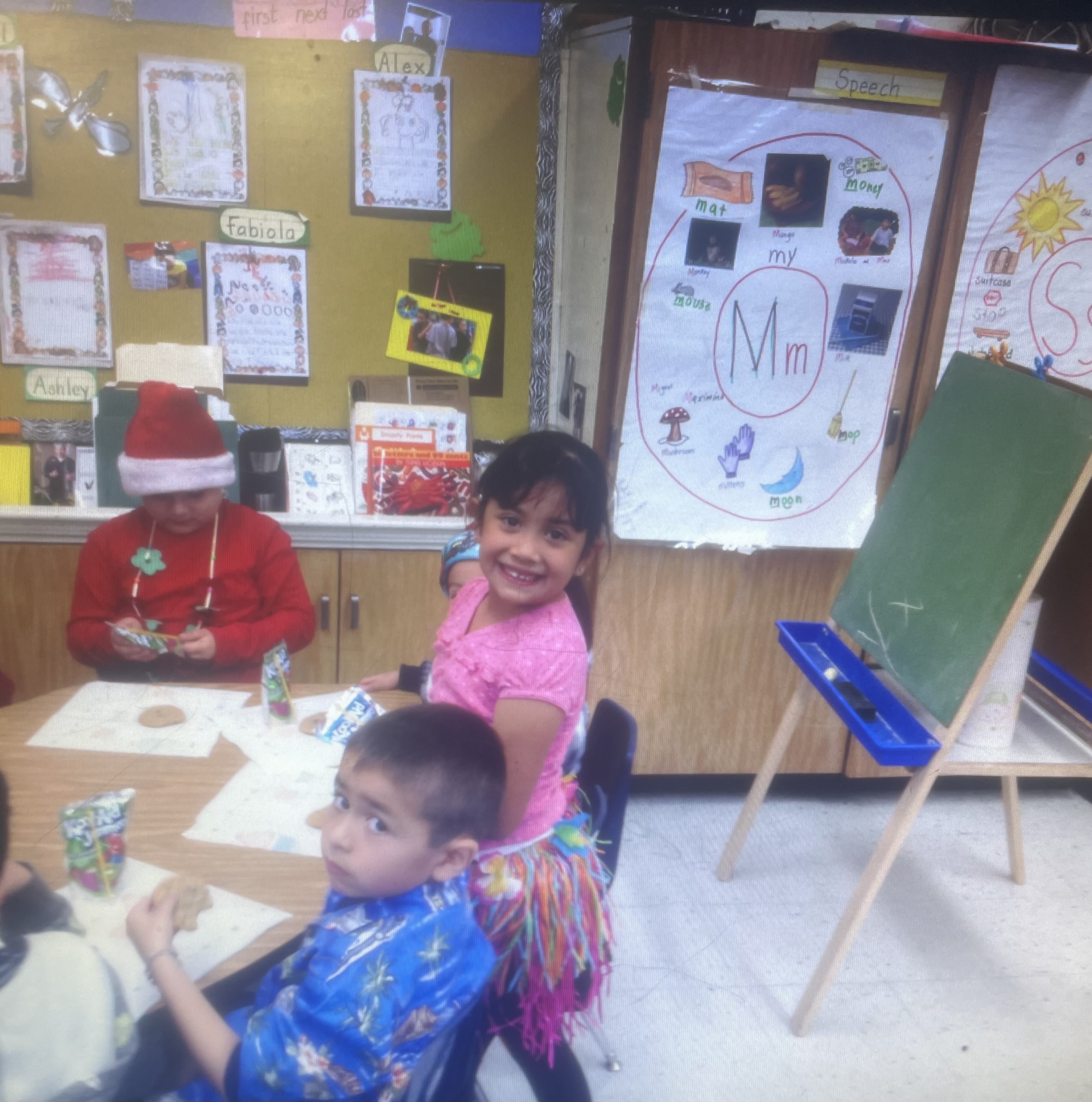
My mom is the reason I was ever diagnosed. A teacher had noticed I wasn't responding in class. She thought I was ignoring her, when really I just couldn't hear her with my back turned, and she told my parents to get my hearing checked. The clinic doctor tested me and said I was fine, but my mom didn't believe him for a second. She picked up the headphones from the testing booth, put them on herself, and found they weren't even working. That was how she knew the test was a sham, and she refused to leave without a referral to a real audiologist. That's the appointment where they finally found my hearing loss.
You were raised in the hearing world, with no connection to the Deaf and Hard of Hearing community at all. How do you feel about that now?
If I could go back, I would tell my parents one thing: please don't let her grow up thinking she's the only one. Raise her however you want, but make sure she knows there are others like her out there. They couldn't have, though. I'm the first person in my family with hearing loss, so they had no experience to draw on and no idea that world existed. My dad is from Mexico, my mom is from El Salvador, and where they grew up, people with hearing loss are simply ignored. But my parents refused to do that. They fought for me instead.
When I was diagnosed, the audiologist told them to raise me like any other child, not to treat my hearing loss as something that set me apart. They listened, and without anyone meaning for it to, the lesson I grew up with was, I'll figure it out. But figuring it out on your own, when no one around you ever has, is not the same as being shown how. And no one ever showed me.
What was school actually like for you?
It was hard, especially early on. I was bullied at my first two schools before I ended up at one that was part of the Whittier Area Cooperative Special Education Program, or WACSEP, which is where I finally got real support. Rather than placing me in separate classes, they sent specialists into my regular public school, audiologists and therapists who checked in on me throughout the week. I got my hearing aids at five, and later they gave me an FM system, a microphone I was supposed to hand to my teacher so their voice would come through clearly. But using it meant singling myself out in front of the whole class, and I was terrified that would make the bullying worse, so I avoided it. I didn't start using it until fifth grade, when Lulu, my Hard of Hearing specialist, told me I had to stop hiding and just use it.
For a long time you didn't know anyone else with hearing loss. When did that change?
For years I was the only one in my grade. I'd occasionally see another kid at speech therapy, but they kept their hearing aids hidden, the same way I did, so it never made me feel less alone. If anything, it made me want to hide mine more. Then, in high school, I met my friend Christian through WACSEP, and he was the opposite of everyone I'd known. He had grown up in the Deaf and Hard of Hearing community, he was fluent in ASL, and he wore his hearing aids like they were nothing to hide. He simply wasn't ashamed of who he was. I remember thinking, if he isn't afraid, then why am I? That was the moment I started to feel proud of who I am.
How did you find HLAA?
It started with a scholarship. At a summer social, a panelist with hearing loss told me about one from HLAA, and I applied at the very last minute, not expecting anything to come of it. Then I was selected, and a whole world I hadn't known existed opened up. Until then, I had assumed hearing loss was mostly a childhood thing, just me and a few others. My first Walk4Hearing, in 2025, undid that completely. I looked around at the crowd, little kids and grandparents, hearing aids and cochlear implants everywhere, all of us there for the same reason, and something settled in me. I had spent my whole life believing I was the only one. I wasn't even close.
What does being a Young Adult Ambassador for the LA chapter mean to you?
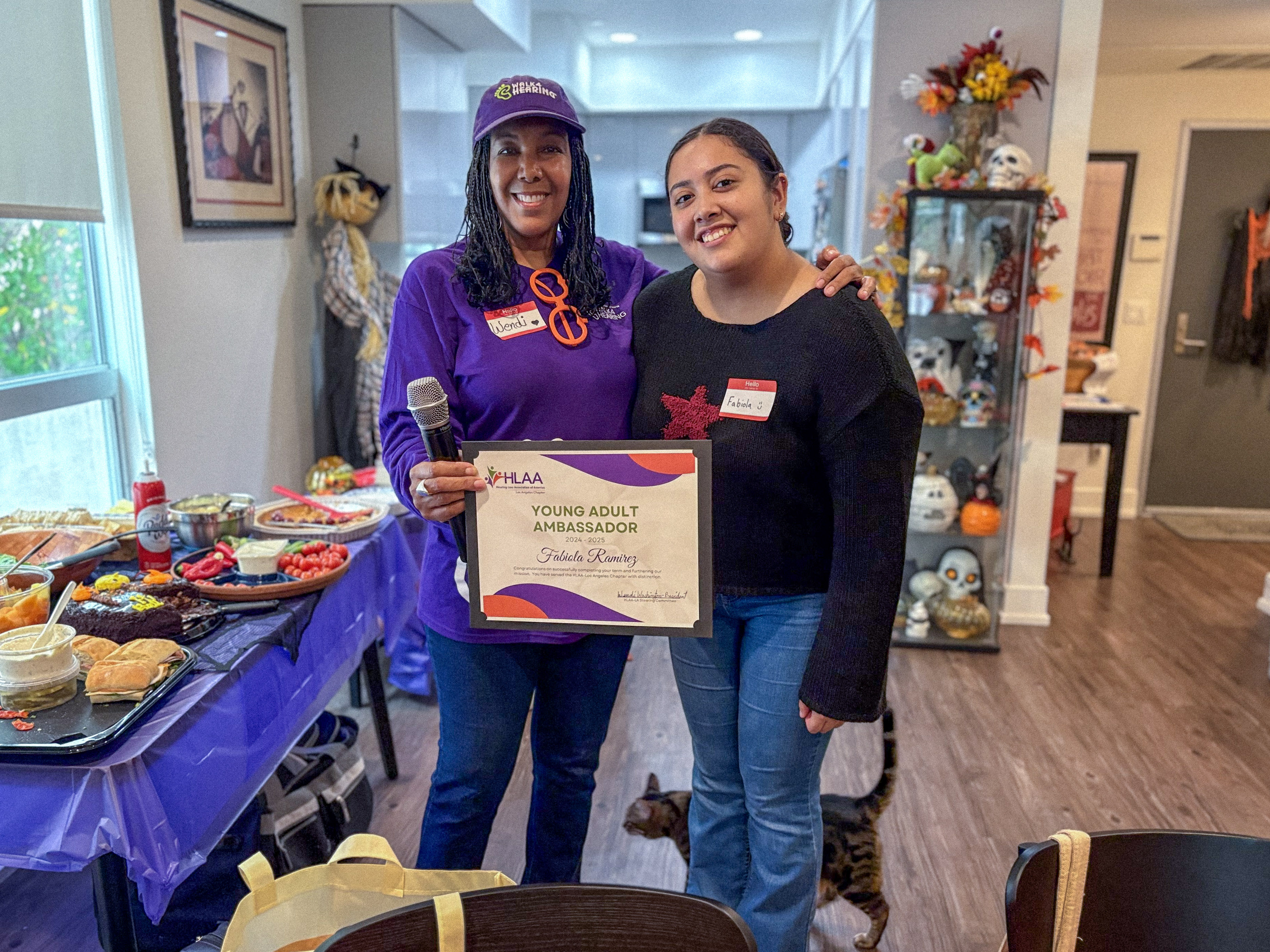
It changed who I am. I walked into that chapter still half-hiding and unsure of myself, and it's where I became someone who isn't afraid to be Hard of Hearing out loud. For the first time, I belonged somewhere completely. That's why, when my term as ambassador ended and no one stepped up to take it over, I didn't let it go. I came back as a volunteer. I couldn't walk away from the thing that gave me back to myself.
You're now studying communication disorders, the science of what happened to you. What made you choose audiology?
My mom asked me one question I couldn't stop thinking about: why don't you become an audiologist? It should have been an easy yes. I love helping people, I have the experience, I work hard. But it stopped me cold, because I understood right away that to become an audiologist, I would first have to accept myself, fully and out loud. I sat with that for an entire summer, asking whether I wanted to spend the rest of my life in the shadows. By August I had my answer. I went back to my mom and told her she was right. I want to be myself, hearing aids and all.
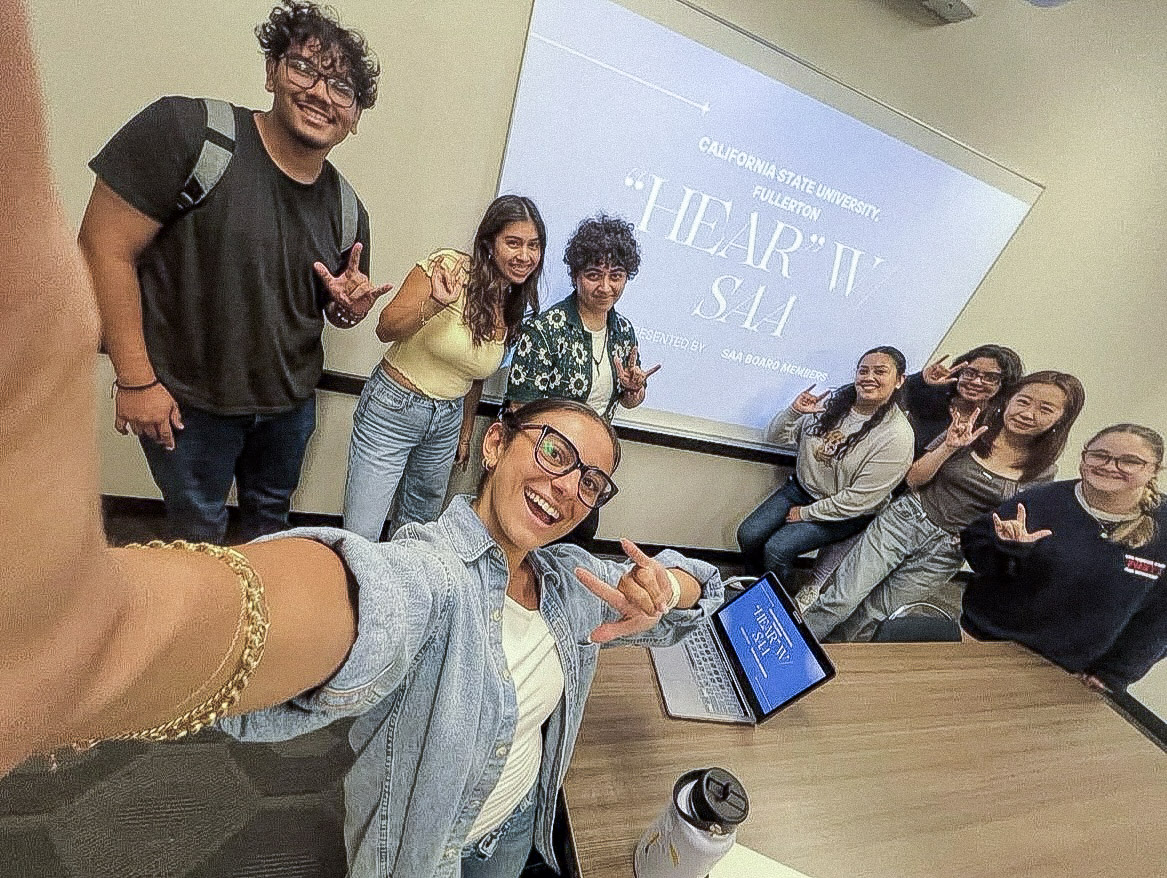
You've said advocating for yourself and accepting yourself are two different things.
They are completely different things. By high school I could walk up to a teacher and ask them to switch to a clear mask so I could read their lips, to give me a seat in the front row, to add captions to a video, without flinching. Lulu had drilled it into me: speak up, don't be shy, tell people what you need. And I was good at it.
But advocating was something I did. It never touched how I felt about myself. I could fight for every accommodation I needed and still go home wishing I were someone who didn't need any of them. Being at peace with being hard of hearing took years longer than learning to ask.
Who are you trying to reach now?
The kid I used to be. Young people facing hearing loss for the first time, who don't know yet that they're not alone. So many of them hide their hearing aids, and I understand the impulse, because I hid mine too. But hiding never protected me. It didn't stop the bullying, it just meant I missed half of what happened in class and stayed ashamed of myself for years longer than I had to. So now I do the opposite. I hand out flyers around campus for the Long Beach Walk4Hearing, and I sit in the front row with Christian and another friend who has a cochlear implant, where I can feel the students behind us watching how we carry ourselves.
I think about my own family, too. If my brother has children one day and they have hearing loss, he won't have to panic, because I'll be there for them. I was the first in my family with no one to look to, and I don't want anyone after me to feel that way.
What do you want to say to the kid who's still hiding?
Don't be afraid. I've been through it, and I know how hard it is, but you do get through it. Wear your hearing aids, and be proud of them. You're not different. You're just you. It's like wearing glasses. Glasses help people see, hearing aids help me hear. It's that simple. Your hearing aids are part of you. They are not separate from you. They don't make you less, they make you who you are.
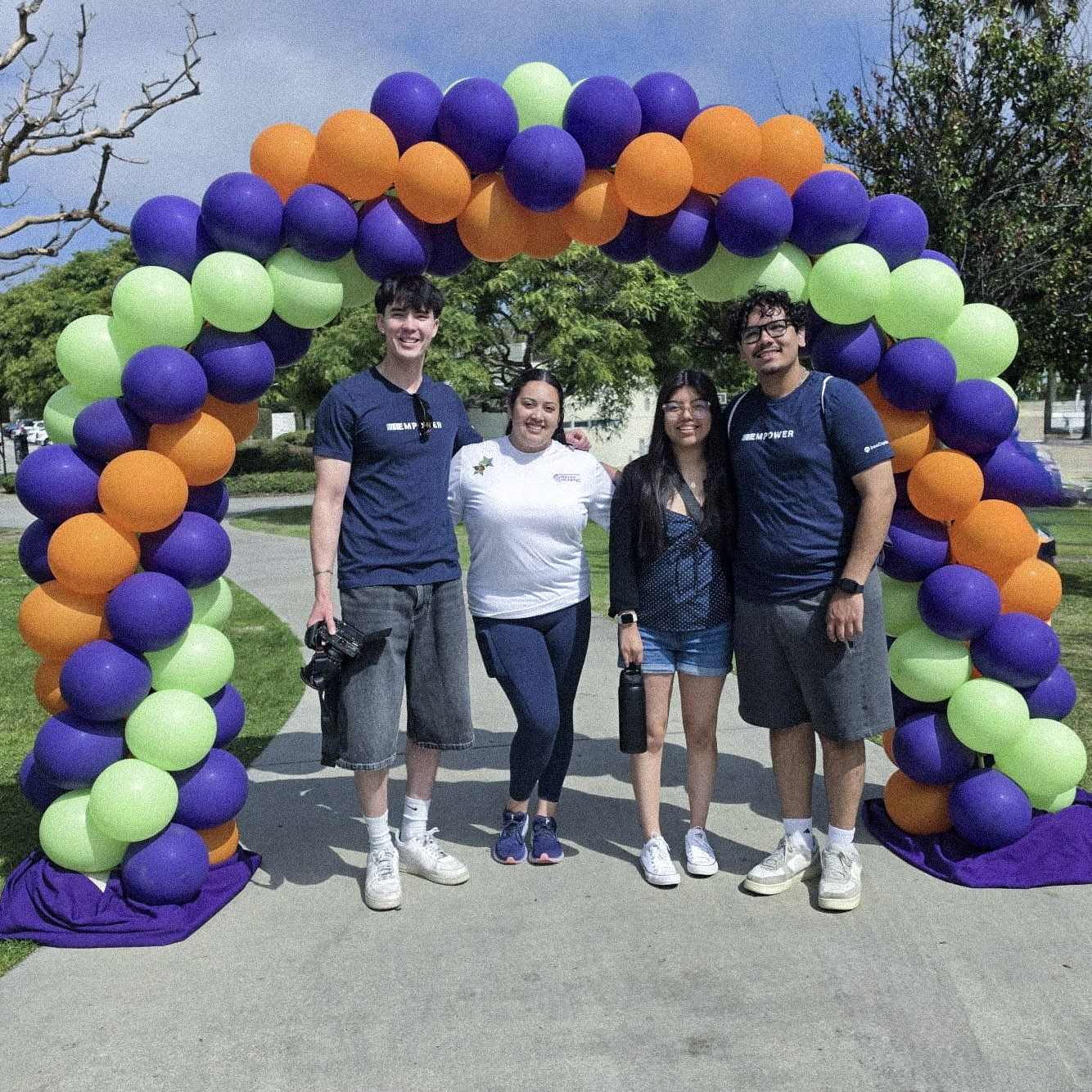


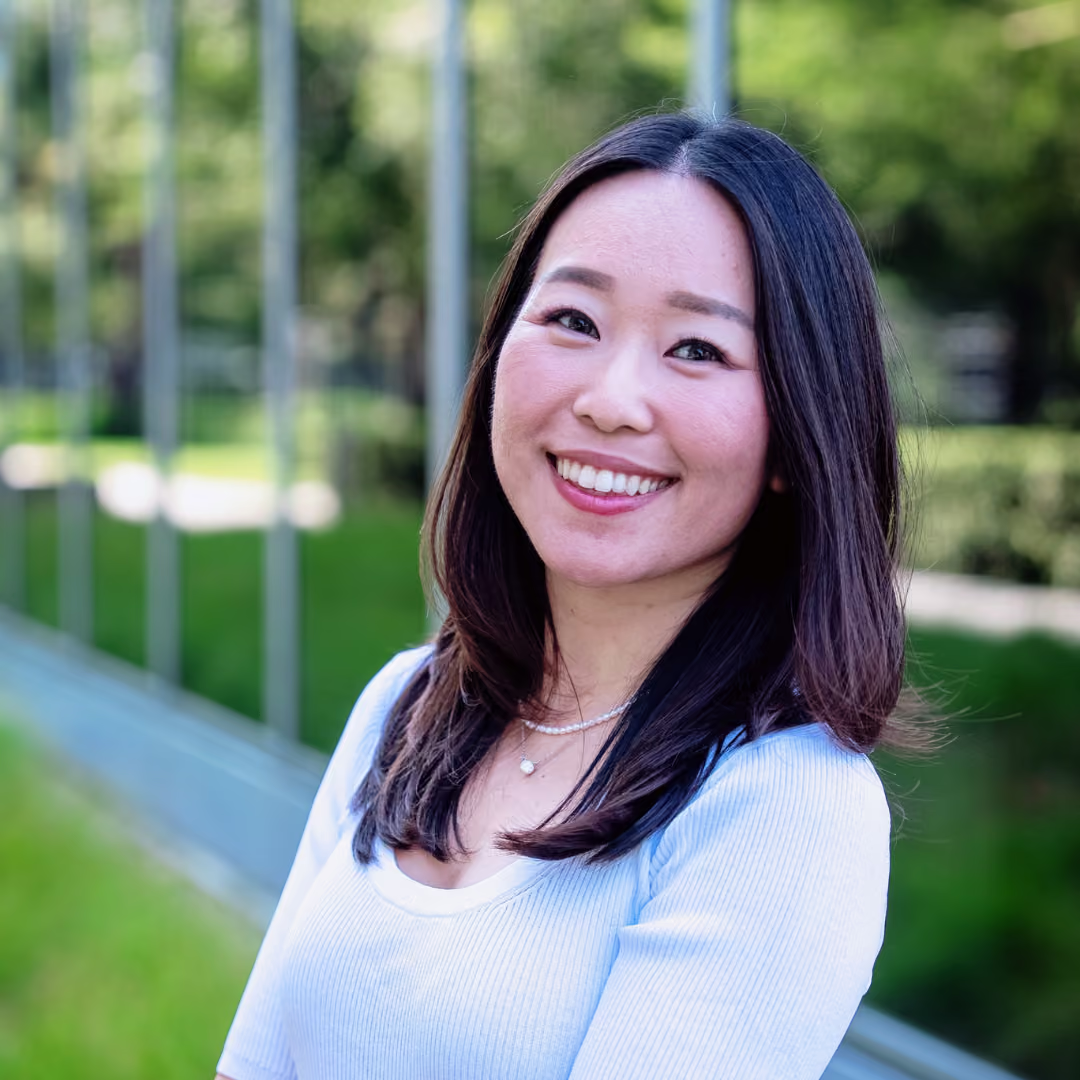
Minah Han is a marketing professional dedicated to advancing accessible communication solutions for the deaf and hard of hearing community. At InnoCaption, she leverages her expertise in digital marketing and storytelling to amplify the voices of individuals who rely on innovative technologies for everyday conversations. Minah is passionate about bridging the gap between technology and accessibility, helping to drive awareness and education around captioned calling solutions.
InnoCaption provides real-time captioning technology making phone calls easy and accessible for the deaf and hard of hearing community. Offered at no cost to individuals with hearing loss because we are certified by the FCC. InnoCaption is the only mobile app that offers real-time captioning of phone calls through live stenographers and automated speech recognition software. The choice is yours.