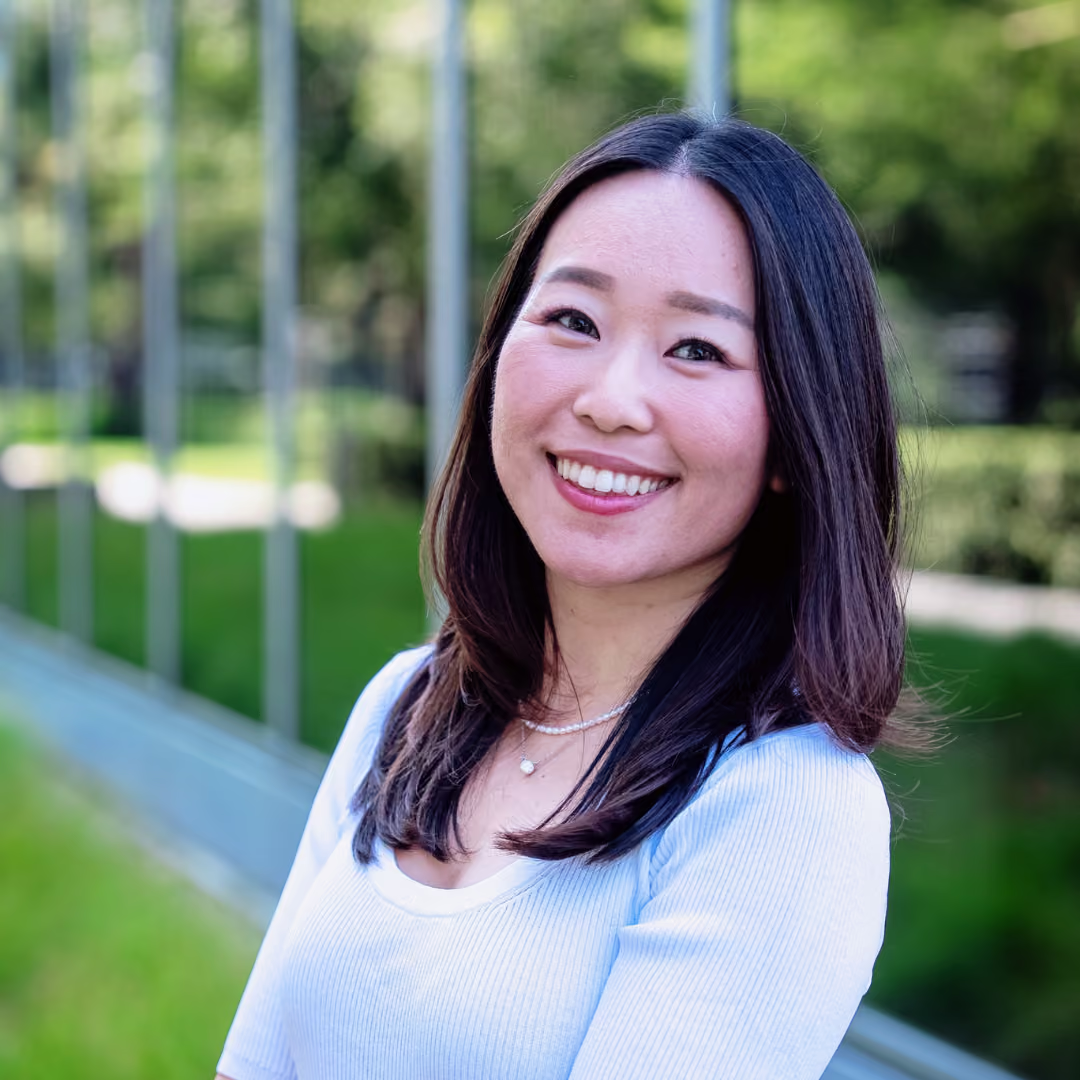
As we celebrate InnoCaption’s 10-year anniversary, we’re also looking ahead to a new chapter in our story: Paul Lee, the son of founder Joseph Lee, is taking over as CEO after leading day-to-day operations and strategy since 2020. We sat down with Paul to talk about what brought him to InnoCaption, how our users shape the app, and more.
For readers meeting you for the first time: who is Paul Lee outside of the job title?
Outside of work, you can usually find me at an ice rink these days, as I’m a fairly new hockey dad. Both of my sons joined travel hockey teams this past year, so our weekends and holidays now revolve around practices, tournaments, and a lot of driving. As demanding as it is, it has been a thrill, and because The Mighty Ducks was one of my favorite movies growing up, watching my boys skate for our local Junior Ducks team makes me feel like a kid again.
In a way, our boys are just beginning the kind of roaming adventures I grew up chasing. After college, I lived and worked in New York, San Francisco, Hong Kong, France, Singapore, and London, and traveled wherever I could in between. My wife and I have since made our home in Irvine, California, where InnoCaption is headquartered, but we have held onto that love of travel. Between us we keep a long list of places we want to take the kids, and we make sure to fit in a few good international trips as a family every year.
All that time on the move is also when I get to learn. On a flight, in the car between school and the rink, or just commuting, I always have a podcast going, usually about technology, entrepreneurship, or history. Between family, work, and the places and ideas I still want to explore, my days stay full, and that suits me well.
You joined InnoCaption after more than a decade in finance. What drew you in?
What drew me in was the impact I knew this company could make. My father had spent more than a decade building InnoCaption, investing his own retirement savings, and the accessibility technology he had developed deserved to reach far more people. So in 2020, my wife and I both quit our jobs and moved our young family to California. That pull had been growing in me for a long time, and while the transition wasn’t easy, I’m proud we made the leap.
Can you share a memorable challenge you had to face in the early years?
There was one afternoon in late 2021 that really captured what it felt like to lead a small bootstrap company through hard times.
Our team had built a loyal user base before I joined, almost entirely through conferences and other in-person events, but COVID wiped those channels out overnight. Meanwhile, marketing platform policy changes hurt our ability to reach people with the new digital campaigns I’d helped launch. As a small, family-owned business with no outside funding, we were facing headwinds from multiple directions at once. Then things got even worse.
One afternoon, a toilet in our office backed up and water started seeping under one of the bathroom doors. Sewage was spreading across the floor toward our desks. It felt like a metaphor for the whole moment: the compounding challenges, the hardships piling up no matter how fast we worked. I sent the team home, and my brother John (one of our engineers) and I mopped, bleached, and sweated until past 10 that night, when the plumber finally arrived.
At that moment, it was hard not to think about the career I’d given up and the sacrifices my wife had made when she quit her job. I wondered whether this had been the right choice.
What kept you going?
The little moments with our users. One of them spent hours at our office helping us debug a Bluetooth audio issue. Each test reconnection sent a loud noise into her cochlear implants, but she kept at it with us because she knew that fixing it would help others like her, too. When we finally resolved the issue, I walked her to her car and she gave me a hug. “You’re doing a great job,” she said. “Thank you for the work you’re doing.”
Those were the people I thought about on the harder days. They were why I made it through.
What’s something people would be surprised to learn about how new features are created at InnoCaption?
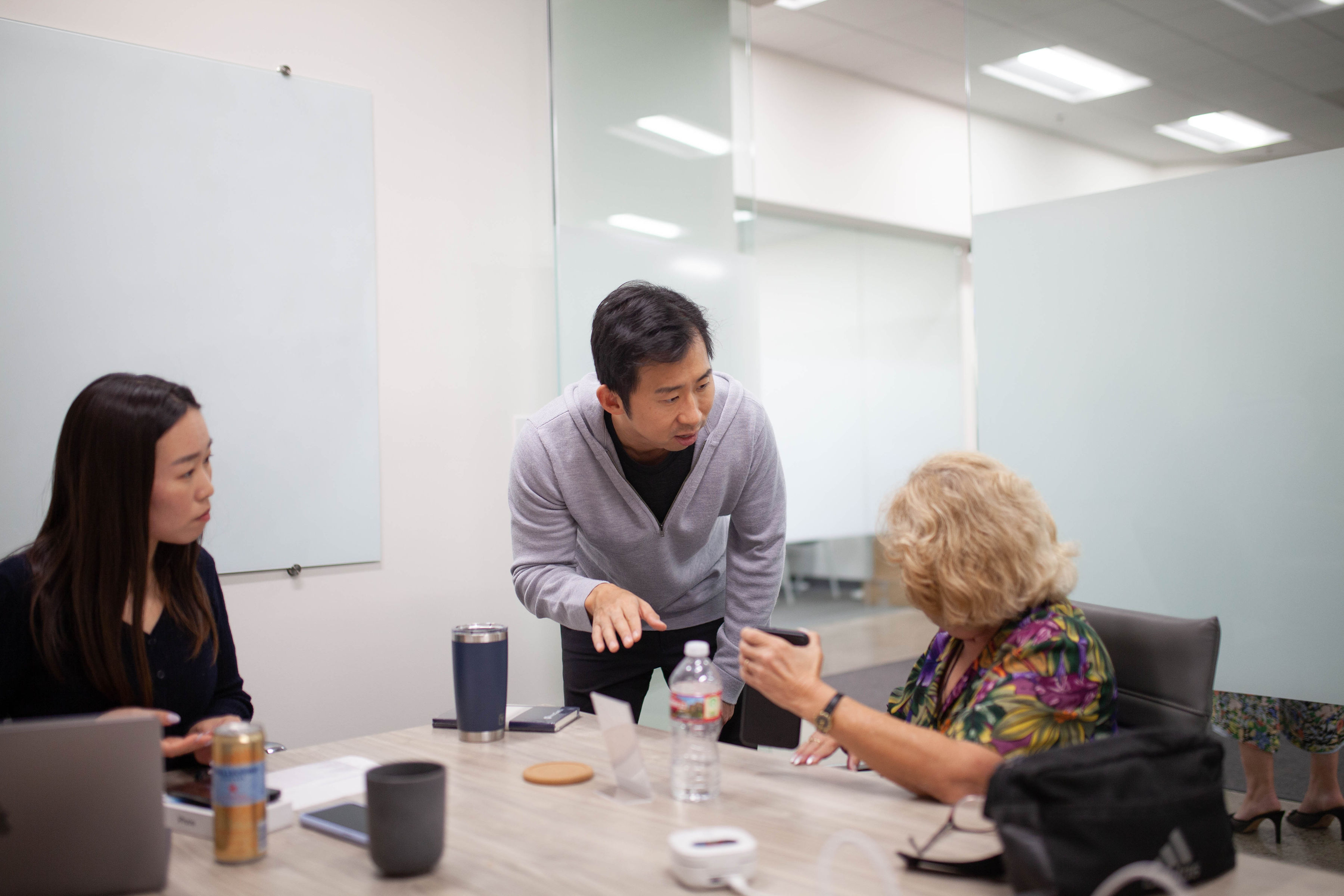
How user-led the whole process is. Our product team leaders and I have monthly meetings with the whole customer support team to hear about all the feedback our users have provided us, and everything we build starts there.
The story behind Caption Alert, a feature that uses a flashing screen and phone vibration to notify you that captioning is starting again after a pause, is a great example. One day, a user named Dave was put on hold by a customer service agent. After a while, he naturally started doing other things. But while he was looking away from his phone, they came back and asked if he was still there — and because he couldn’t hear them and didn’t respond, the agent hung up. Dave reached out to us asking for help, and that’s when we created Caption Alert.
What is your approach to AI? How would you characterize its role at InnoCaption?
We see AI as a tool like any other, useful in some cases but less so in others. Rolling out AI captioning, for example, allowed us to serve far more users than we otherwise could, and AI coding tools have enabled us to build and ship new features faster than ever. (One of our engineers created the picture-in-picture feature in just a few minutes.) That means we can be incredibly responsive to our community and build exactly what they need.
At the same time, though, the human touch is essential to what we do. We’re still the only captioned phone service provider to offer captioning by live stenographers, and you can always reach a real person on our customer service team. At the end of the day, our company exists to help human beings connect with each other, and that will always be reflected in the experience.
Joseph and Joe are moving to the Board but staying involved. What does that continuity look like in practice?
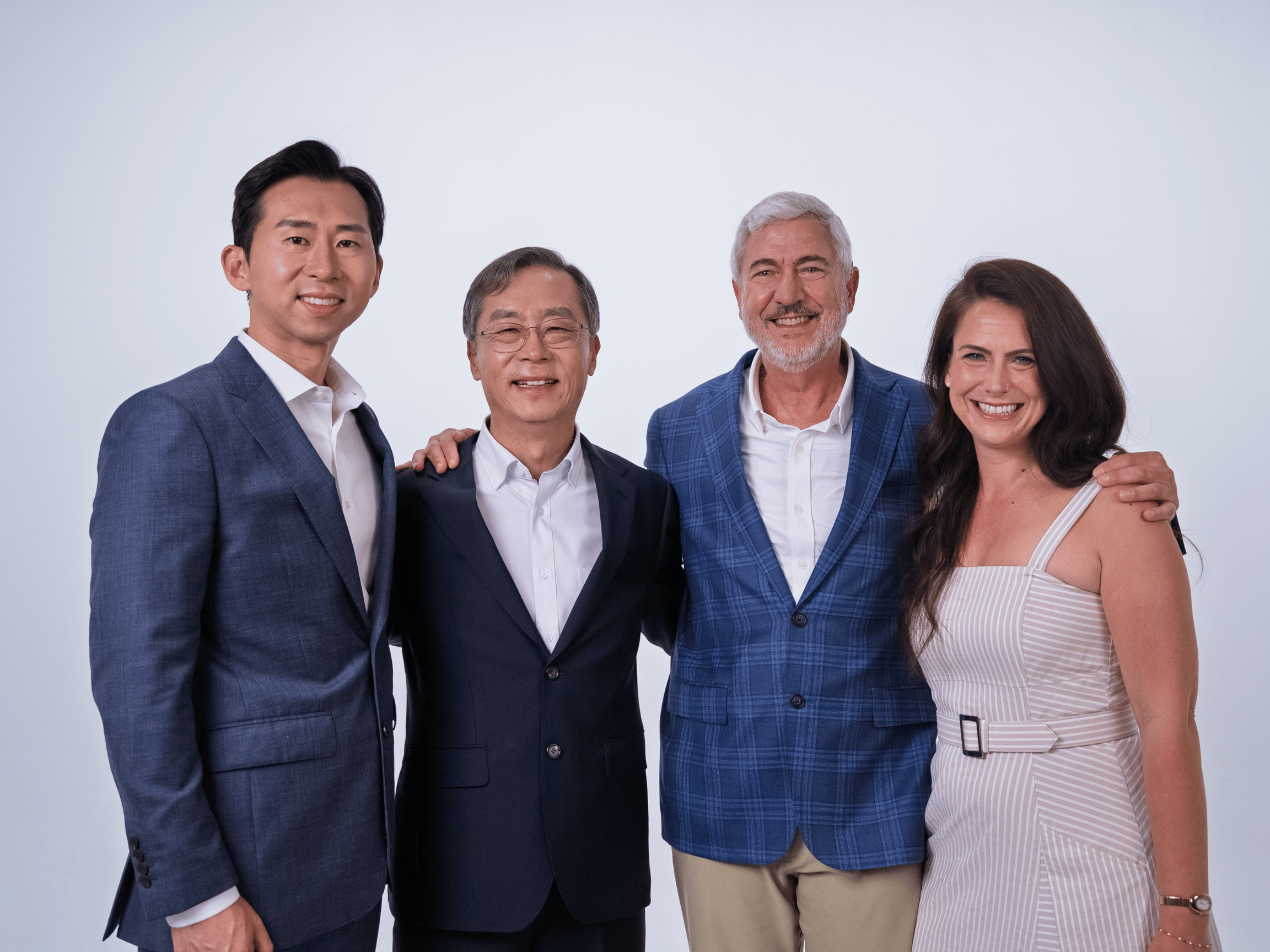
While Joseph and Joe will be taking a step back from the day to day, they’ll still be there to give our leadership team guidance and advice. The perspective they’ve gained over years in this industry is invaluable, and trying to live up to the example they’ve set — as leaders, mentors, and advocates for accessibility — will help me be the best possible version of myself as CEO.
What does this leadership transition mean for the people who use InnoCaption every day?
Honestly, I hope they barely notice it! InnoCaption will still be co-owned by the Duarte and Lee families, and we’ll still be committed to providing the best accessible communication technology to people with hearing loss or speech disabilities. While our products and services will continue to evolve, everything that truly matters will always stay the same: our dedication to our users, our commitment to acting with integrity, and our passion for making the world a more accessible place for everyone who needs it.
Ten years from now, what do you hope someone writing InnoCaption's 20-year retrospective says about this chapter?
I hope they say that we helped even more people feel empowered in their everyday lives.


Minah Han is a marketing professional dedicated to advancing accessible communication solutions for the deaf and hard of hearing community. At InnoCaption, she leverages her expertise in digital marketing and storytelling to amplify the voices of individuals who rely on innovative technologies for everyday conversations. Minah is passionate about bridging the gap between technology and accessibility, helping to drive awareness and education around captioned calling solutions.
InnoCaption provides real-time captioning technology making phone calls easy and accessible for the deaf and hard of hearing community. Offered at no cost to individuals with hearing loss because we are certified by the FCC. InnoCaption is the only mobile app that offers real-time captioning of phone calls through live stenographers and automated speech recognition software. The choice is yours.


.avif)