When you choose human captioning on InnoCaption, there's a real person behind the words appearing on your screen. But have you ever wondered who that person is or what it takes to caption a phone conversation in real time?
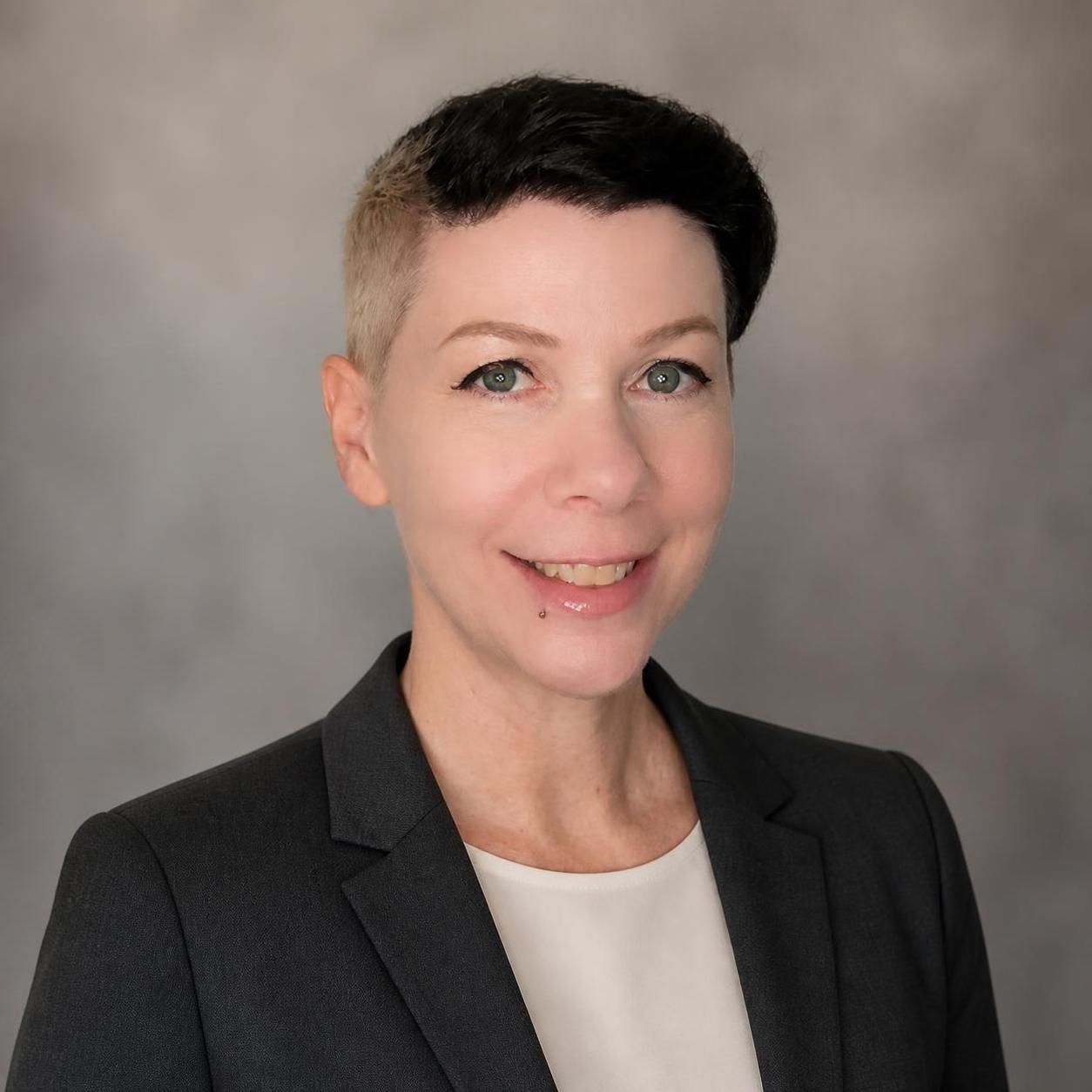
Meet Jennifer Peirson, an InnoCaption stenographer based in Virginia. With more than two decades of stenography experience, Jennifer's career has taken her from courtrooms to college classrooms and now to captioning phone calls. We spoke with her about how she discovered stenography, what goes into live captioning, and what she enjoys most about her work.
How did you first learn about stenography, and what made you decide to pursue it?
I started life as a music major in college. It's what I wanted to do since the fourth grade, and I actually went through with it all the way through school. I went to James Madison University in Harrisonburg, Virginia, and I loved it. But by the time I graduated, I was completely burned out and never wanted to touch my instrument again.
Fast forward a little bit, and I'm working in bars, waiting tables, bartending, all that kind of stuff. My clarinet teacher, who had been my private teacher since I was a little kid, started doing court reporting. I was like, "What's that?" I didn't even know it was a job people could do!
She told me all about it, and it was surprisingly similar to playing an instrument. The approach to practice is very much the same, spending hours a day learning new things. Eventually, I went to court reporting school.
What kinds of stenography or captioning work have you done throughout your career?
When I was in court reporting school, we took a field trip to the National Captioning Institute outside Washington, D.C. I thought it was the coolest thing I'd ever seen in my life. I wanted to be a broadcast captioner. But my school didn't have a captioning program. All they taught was court reporting, so it was legal or nothing. I ended up spending 16 years as a court reporter. I loved it until I didn't. Court reporting is adversarial by nature, and eventually I started to burn out.
When I finally transitioned into captioning, I trained in broadcast captioning first and then CART, or Communication Access Realtime Translation. A lot of my early work involved providing remote captions for college students and professors. I loved it, loved it, loved it! It felt like getting paid to go back to college, and I could take any course I wanted.
I've also captioned webinars, one-on-one conversations, and all kinds of other events. We don't really get to specialize in one thing. We're kind of expected to be experts on everything, and of course we're not, but we do the best we can.
You spent 16 years as a court reporter. Do you have any funny stories from that time?
One time, when I was still a court reporter in Southern California, I had to take a debtor's interrogatory. It's kind of like a deposition, but it usually takes place at the courthouse.
On this particular occasion, they didn't have anywhere for us to go, so we found a quiet hallway down near the bathrooms. I'm working away, and the person answers a question. I had to interrupt and say, "I'm so sorry. Can you repeat your answer? There was a toilet flushing." And that ended up in the record!
How is live captioning different from court reporting?
It's the same machine and the same theory we learn, but it's surprisingly different. When you're a court reporter, you need to get every single word down, but you can go back and make corrections when you're preparing the final transcript. With live captioning, everything has to be readable and accurate straight out of the gate. It's a completely different brain process.
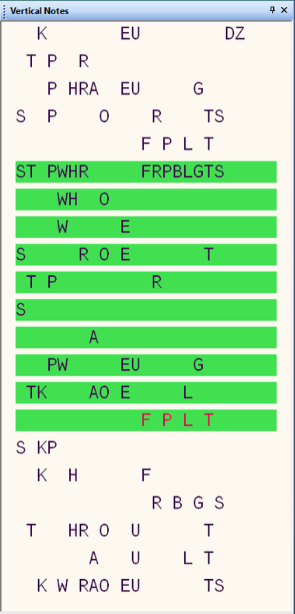
For someone who's never seen a stenographer at work, can you explain what you’re doing?
Our jobs are surprisingly similar to an interpreter's. They're processing a different language, and so are we. We have fancy machines that translate everything into English, but I'm still translating what you say into steno in my head and shooting it out through my fingers on my little magic keyboard. At the same time, I'm watching my screen to see what I'm putting out.
What is a stenography dictionary? Why is it important?
Our dictionary is how we do what we do. It's what allows our stenography software to translate the keys we press into the English captions people see. Every word and word piece, like root words, endings such as -ing and -ed, and prefixes such as pre- and re-, has to be in our dictionary for the software to recognize it.
I have 132,988 entries in my main dictionary, but we also have smaller dictionaries for specific jobs or topics. It's not uncommon to use four or five dictionaries for a single assignment. For example, if I'm captioning a biology class, I might use a dictionary with university-specific names, another with biology terms, and one for identifying instructors and students. And then there's my obscenities dictionary. Yes, that's a real thing! As a CART provider, I always include swear words if they're spoken, so I need to make sure those words are in my dictionary, too.
I work on my dictionary every single day, after every job. I've been doing this for 23 years, and just today I added 20 new words! Our dictionary is our bread and butter.
What kind of training goes into being able to caption conversations in real time?
I was in court reporting school for three years. You start at 40 words per minute and work your way up to 225 words per minute by the time you graduate. But those speed tests are usually read with perfect diction, and that's not how anybody talks in real life.
When I started captioning, I realized how important it was to practice with different speakers, accents, and topics. Even now, if I want to warm up, I use TED Talks. You never know what kind of accent you're going to get, what topic they're going to cover, or how quickly they're going to speak. Some of them are quite dense, and I struggle through them sometimes, but they're great practice.
I also watch a lot of Acorn TV in my spare time, so I'm hearing Irish, English, Scottish, Welsh, New Zealand, and Australian accents. It's really just about getting used to different ways people speak.
What do you enjoy most about captioning phone calls?
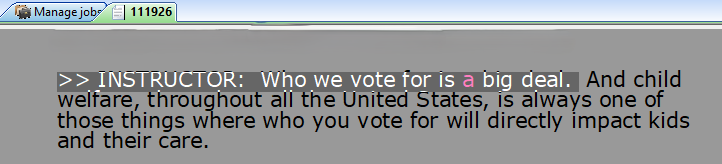
I like that it's always different. With InnoCaption, calls are constantly changing. One might last 30 seconds, another might last a few minutes. Different accent, different topic, different speaker. Boom, boom, boom! It's actually quite mentally challenging when you first start, but now I'm used to working in those short bursts.
Is there a time in your captioning career that particularly stands out to you?
I remember the pandemic. Everybody was stuck at home, whether they were by themselves or with their families. For a lot of people, the only way they could talk to somebody was by calling them on the phone or getting on Zoom. It was nice being part of that lifeline during a time when people really needed those connections.
We were all in the same boat, stuck at home and feeling a little helpless. But I still got to help somebody. That was a nice feeling during a terrible time.
If you could share one message with InnoCaption users, what would you want them to know?
I would want them to know that we care about them. I think that's true of every single one of us. We care about the people we're captioning for and the job that we do.


Minah Han is a marketing professional dedicated to advancing accessible communication solutions for the deaf and hard of hearing community. At InnoCaption, she leverages her expertise in digital marketing and storytelling to amplify the voices of individuals who rely on innovative technologies for everyday conversations. Minah is passionate about bridging the gap between technology and accessibility, helping to drive awareness and education around captioned calling solutions.
InnoCaption provides real-time captioning technology making phone calls easy and accessible for the deaf and hard of hearing community. Offered at no cost to individuals with hearing loss because we are certified by the FCC. InnoCaption is the only mobile app that offers real-time captioning of phone calls through live stenographers and automated speech recognition software. The choice is yours.