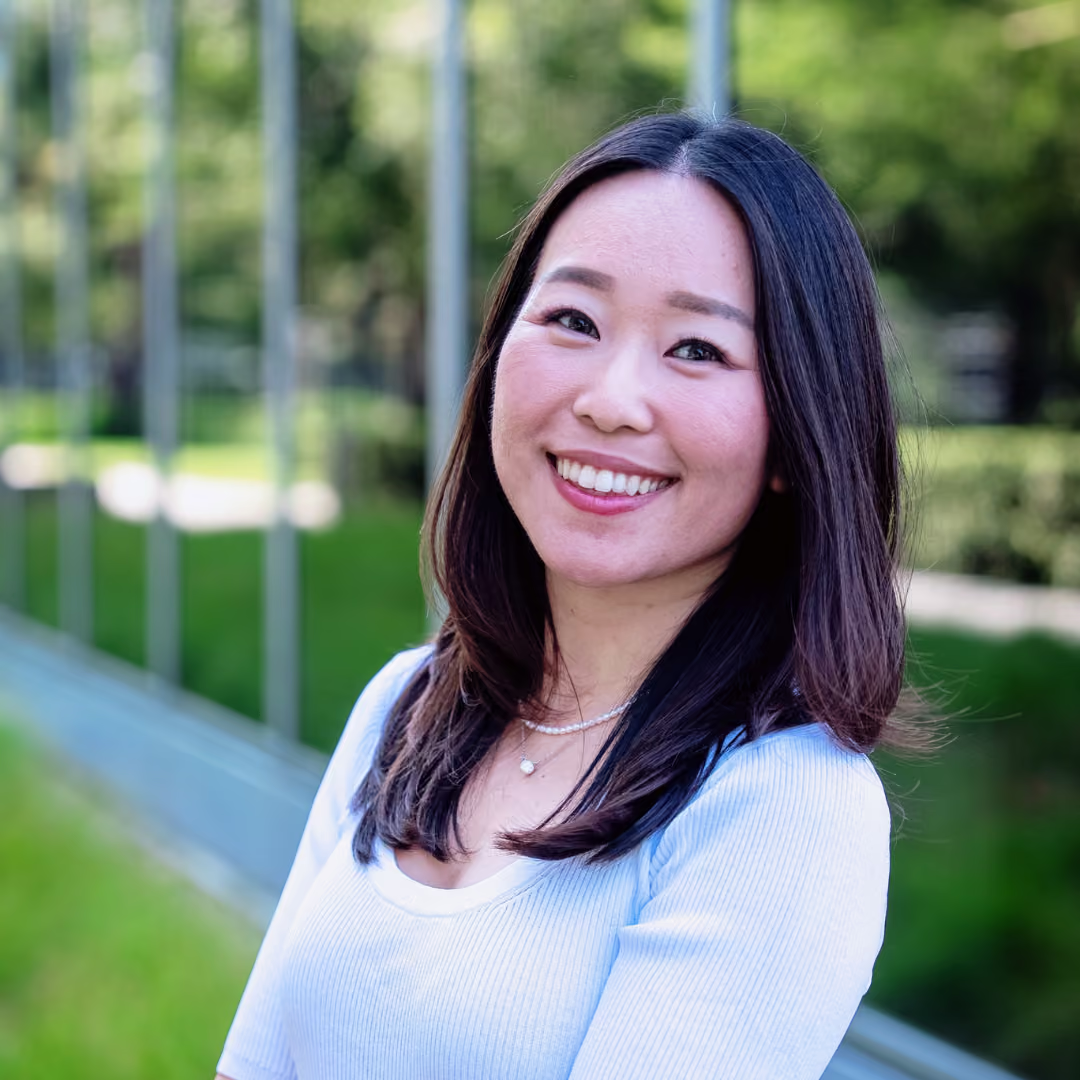
Josh Garrett is the Head of Operations at SnapCap, a marketplace built by the team behind InnoCaption that makes it simple to book professional live captioners for meetings and events. He’s spent his entire career in the accessibility space, from helping college students learn ASL to starting his own interpreting company. It’s something he’s been passionate about all his life.
“For me, there’s always been this desire for people to be treated fairly and equally,” says Josh. “It was probably ingrained by my mom. She was one of those people who, if someone needed help, she was there. She never taught it to me, I just watched her do it.”
In this Q&A, Josh talks about where his interest in ASL came from, the process of booking CART captioners on SnapCap, and what he believes the future of accessibility should look like.
Tell us a little bit about your background. How did you get introduced to sign language?
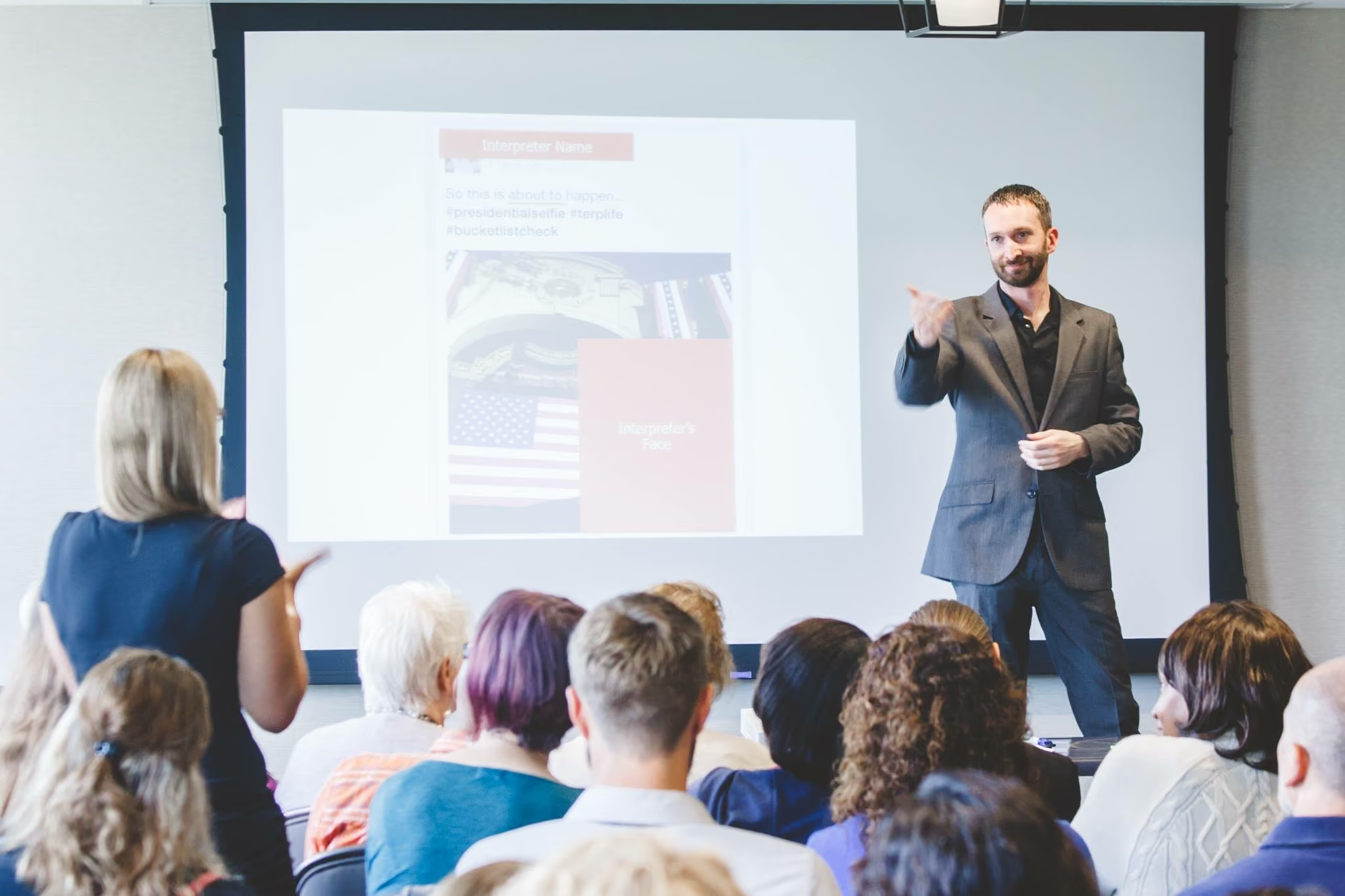
I started learning sign language in the sixth grade. There was a child who was deaf in one of my classes, and I saw him with no interpreter and no access, so I learned to communicate with him. From there, I got interested. It was one of those things. I studied Spanish, but it never necessarily clicked. But with ASL, it came very naturally to me. It wasn’t a matter of, you know, I have to practice and really sit down and learn. I enjoyed the language. I loved how it worked.
There was a deaf ministry within a church program, and I started working within that program, interpreting in churches. And then in college, I was asked to interpret. I had deaf roommates, so it was literally full immersion for me.
What made you decide to dedicate your career to accessibility?
It was just important for me to do something where I felt like I was doing good in the world and making a difference. And if you’ve ever been in a room where two brilliant people couldn’t communicate, and then they could have this phenomenal conversation solely because there was a tool to help — if you have a phone, you can place that call; if you have an interpreter, you bridge that communication gap — it’s a really cool thing. Once you see that, how access happens, it’s almost like a high. You’re like, “Why would I not want to do this with my life?”
You had your own interpreting company for years. How did you end up at SnapCap?
As a natural progression of my company, I added CART captioning services. I found the best company, and I would hire through them as I needed captioners. That company ended up acquiring mine to bring in interpreting. At some point, they asked me to run operations for the whole company, both the interpreting and captioning sides.
Later, a company I consulted for met Paul Lee, [CEO of InnoCaption, SnapCap, and Bridge], and pulled me onto one of his projects. He asked them if he could chat with me, and joining SnapCap was a natural fit. I really appreciated a company that wasn't just about the bottom line. They actually care about people and access. And to me, that was like, "This is home."
Who are the captioners on SnapCap? What kind of experience do they have?
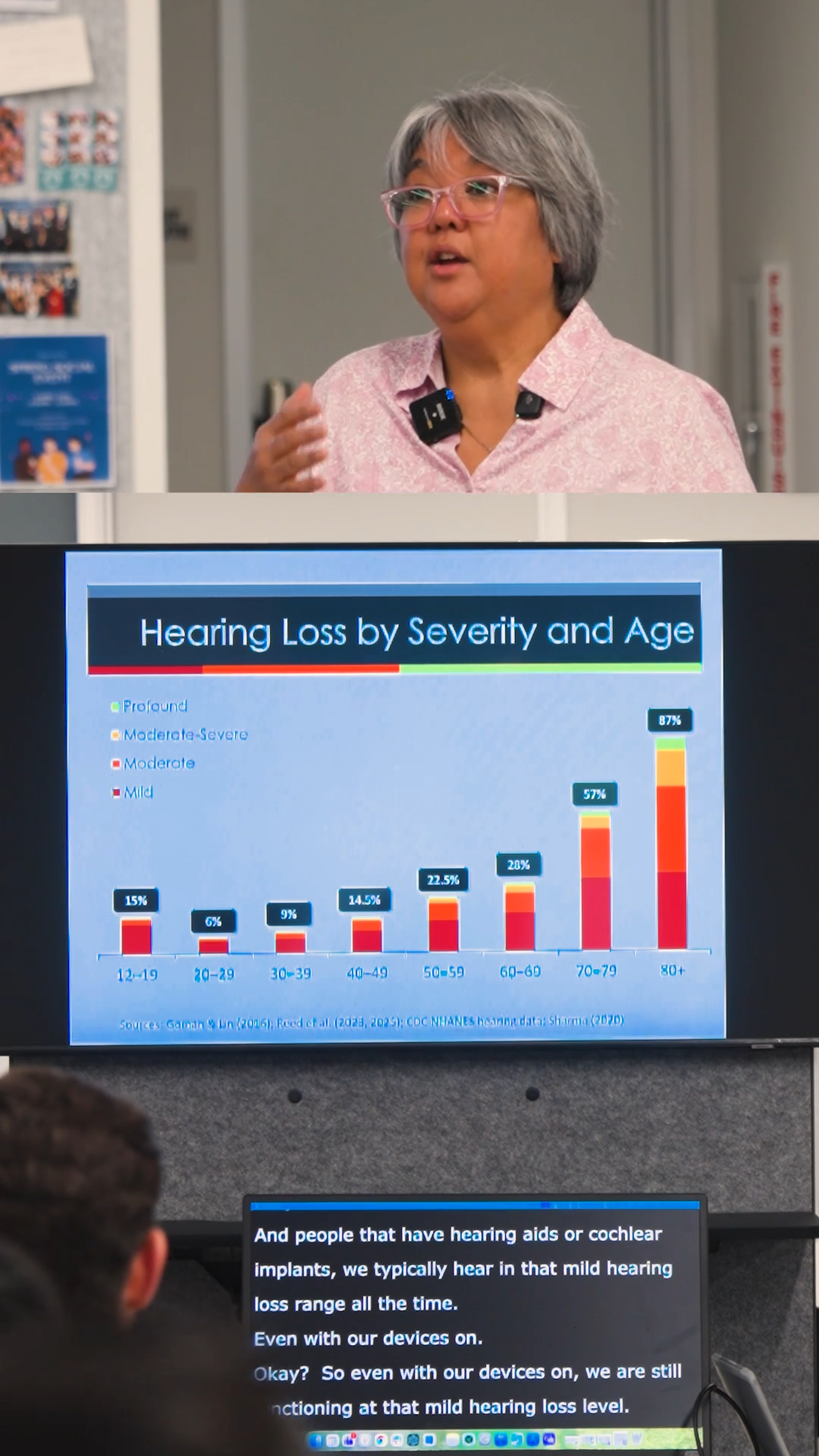
The variety of people on the platform is really great. There’s a mix of those who have done court reporting and those who have done CART captioning. We have people who are fairly new, and then we have people who have done this for 20+, 30+ years. We also have people with specialties. If you need legal, you can find someone who knows legal and has done it. If you need medical, you can find someone who knows that and has done it.
And, because captioners are setting their own rates — instead of a traditional agency, where they set one potentially higher rate — the rates are varied. That means people who are booking services can choose who they want at a rate that’s affordable for their organization or company.
Let’s say I’m booking a captioner for the first time. What do I need to figure out?
Two things: how the captioner gets audio, and where the captions will be displayed.
That’s it?
That’s it. When I speak with someone, I say, “What’s your setup in the room? How do you want to view the captions?” And from there, I give them the best option.
Do you help clients navigate the process? What does your role look like behind the scenes?
The joy within this role is that it allows me to be there when someone books. I can assist with a booking. I can assist with any questions they have along the way. We can assist with tech setup. We can assist with caption display. I’m also looking at process improvement. What are people saying as they’re going through the process? How can we make things better? We might think something works super well, but if we get consistent feedback on it, we can change it.
With the entire world veering towards AI, what makes human captioning so valuable?
The quality is better. There are certain things AI can’t convey or doesn’t pick up, like background noises or something in vocal intonations. Someone tearfully saying something or a voice cracking or shaking, things that a human will catch. If there are overlapping speakers, a human can give you what this person said, what that person said, and then say they’re speaking over each other. Accents can throw certain speech recognition programs off, too.
The other thing is grammar. If you’re someone who is reading the captions and there's no grammatical structure or there's missing commas or periods or punctuation — how do you do when you don’t get any of that? If you do that comparison between a human and AI or ASR, I'm still choosing a human if I'm really looking at that English grammar for understanding.
Right.
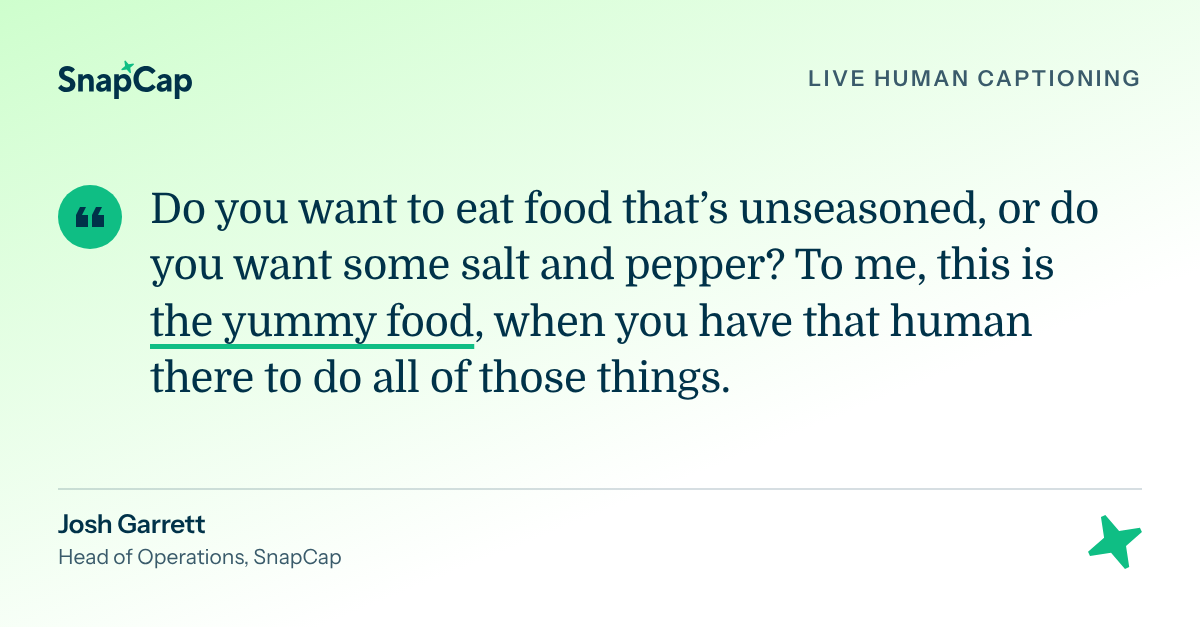
It’s full access. It’s like, do you want to eat food that’s unseasoned, or do you want some salt and pepper? There are certain times when AI may be appropriate, and it could be a cost savings for you and equal access for someone. We can talk through that with you and make a recommendation one way or the other. But for me, this is the yummy food, when you have that human who is there to really do all of those things.
When you think about the future of accessible meetings and events, what would you like to see become the norm?
Building in accessibility from the start, so it’s not an afterthought. It’s not an add-on later. It’s not, “I’m sure we can provide audio in the room. I’m not worried about it.” And the thing is, we know captioning can help anyone. It’s not only for those who identify as having a hearing loss or as Deaf or Hard of Hearing. It can help folks who have English as a second language. It can help the older population. It can help the younger population.
Captions can make or break meetings and events for so many people, so I hope we see people genuinely caring about access and wanting people to have it.
Interested in trying SnapCap? Use code ICNEWS26 for $20 off your first booking. Learn more about SnapCap here.


Minah Han is a marketing professional dedicated to advancing accessible communication solutions for the deaf and hard of hearing community. At InnoCaption, she leverages her expertise in digital marketing and storytelling to amplify the voices of individuals who rely on innovative technologies for everyday conversations. Minah is passionate about bridging the gap between technology and accessibility, helping to drive awareness and education around captioned calling solutions.
InnoCaption provides real-time captioning technology making phone calls easy and accessible for the deaf and hard of hearing community. Offered at no cost to individuals with hearing loss because we are certified by the FCC. InnoCaption is the only mobile app that offers real-time captioning of phone calls through live stenographers and automated speech recognition software. The choice is yours.