Updated November 2026
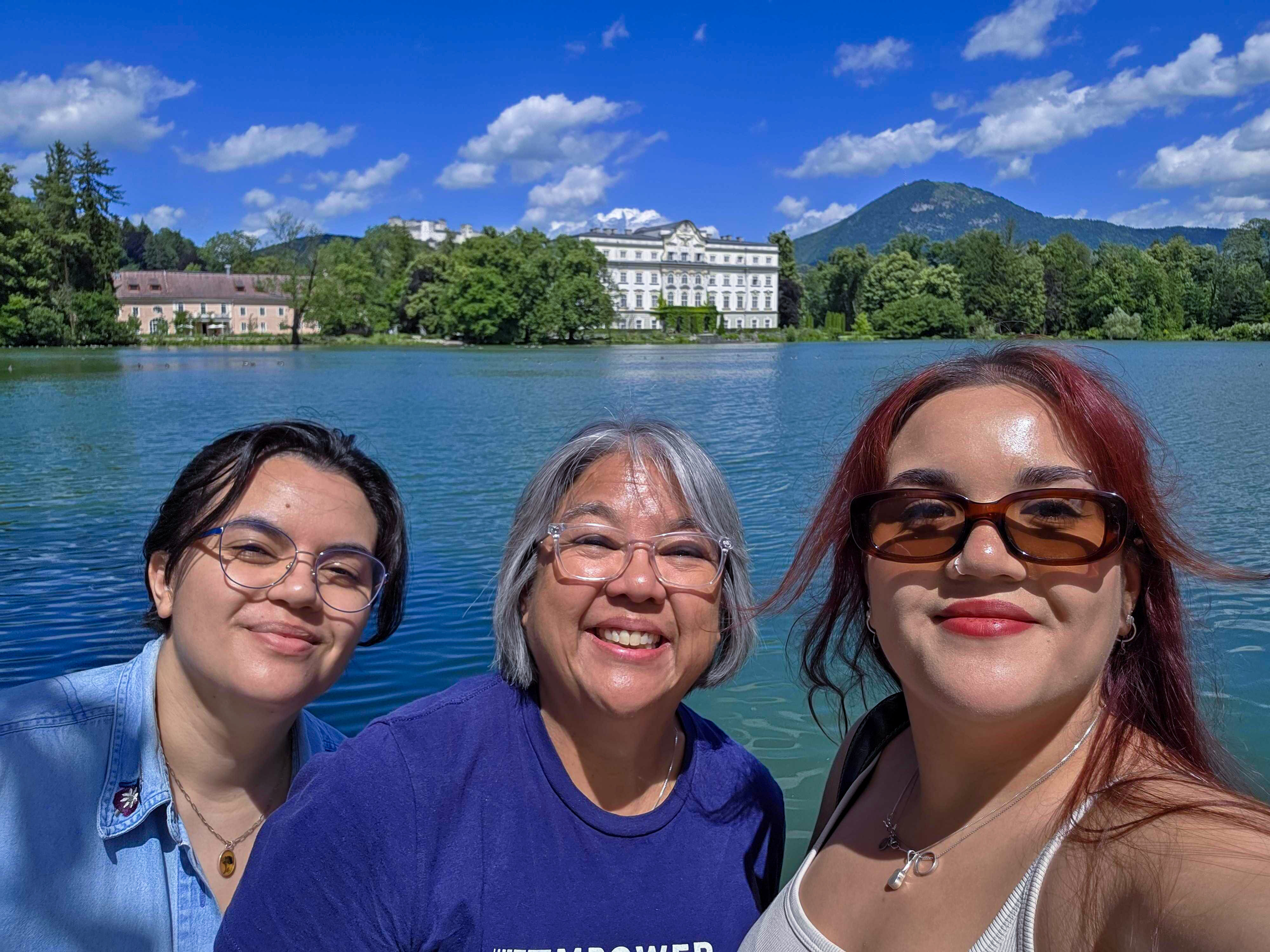
In her role as InnoCaption's Director of Accessibility, Dr. Tina Gonzales Childress draws on both her professional expertise as an audiologist and her personal experience as a late-deafened adult and bilateral cochlear implant recipient to share her knowledge and experiences with the Deaf and Hard of Hearing community. And whether she's traveling to a conference for work or exploring places like Austria with her kids, she knows a thing or two about traveling with hearing loss.
In this Q&A, Tina shares the challenges she's encountered, the tools she relies on, and the tips she's picked up along the way.
You travel quite a bit for both work and leisure. What are some of the biggest challenges you encounter?
For me, airports are probably where I feel the most anxious about communication. There are lots of people, which means lots of noise. There's luggage to drop off, security procedures to follow, and gates to find. It's easy to miss announcements, whether they're made over a loudspeaker or flashed briefly on a screen.
But accessibility has improved slowly, it seems. We're seeing things like captioning on TVs in waiting areas and hearing assistive technology at customer service desks. It also helps that we can access so much information through the power in our pockets: our mobile phones.
You've mentioned that you sometimes prefer to travel in "deaf mode." What does that mean for you?
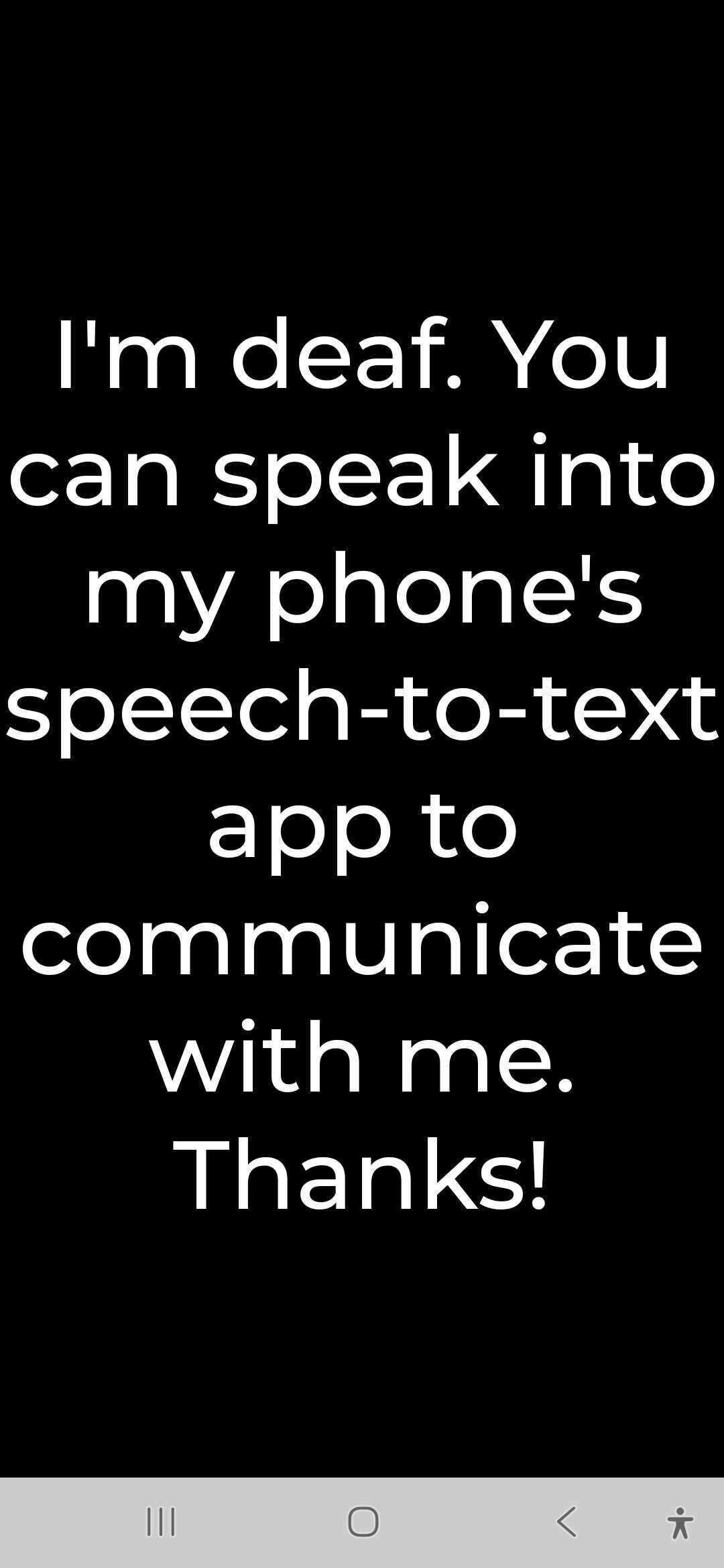
"Deaf mode" means my cochlear implant processors are off and I'm not using my voice to communicate. I know that not everyone would be comfortable doing this, but it’s worked for me.
I like not hearing all the crowd noise, and ironically, when I use my voice, people sometimes forget that I have hearing loss. I'm a late-deafened adult, and people assume that because I can speak, I can hear them. That's not always the case, and I end up missing information about delays, gate changes, and luggage.
When I communicate through a speech-to-text app without using my voice, people tend to think of me as "that deaf woman" rather than "that woman that talks oh but I forgot she can't hear." They're more likely to recognize that I have hearing loss and adjust how they communicate with me.
What apps do you use to communicate when you're traveling?
I like to use Google Live Transcribe for back-and-forth conversations. It's free on Android and lets the other person speak into my phone while I type my responses. For iPhone users, NALscribe and Live Captions are other speech-to-text options.
I also like to use an app called Make It Big when I'm not using my voice. It's available for iPhone and Android. What I love about this app is that I can save messages I use again and again. For example, I can save a message asking someone to communicate with me in writing. Instead of typing it every time, I can simply pull it up and show it to them.
For phone calls, I use InnoCaption, which is also available for iPhone and Android. There have been times when I've needed to make a phone call to reschedule flights. Having captions makes those conversations easier to follow, and I like being able to switch between AI captions and a live stenographer when needed.
What's one of the first things you do when getting ready to travel?
Sign up for alerts about schedule changes or cancellations. Whether it's a rental car, train, or plane reservation, I prefer text alerts because they won't get buried in my mountain of other emails or accidentally end up in spam. I love my smartwatch as another way to get these alerts.
Still keep your eyes open, though, and watch the displays, because changes can happen quickly. There have been a few times when I've had my head down, pounding out a document on my computer, only to look up and realize I'm the only one in the waiting area because I wasn't paying attention.
Do you request accessibility assistance when making travel reservations?
When making a reservation online, I sometimes put a checkmark in the box asking if I need disability assistance. It's an extra level of support should I need it. I don't know how often agents actually look at this information, but it makes me feel better knowing that it's in the system somewhere.
Now, they often don't ask WHICH disability you have. There have been a few times when I've had a wheelchair waiting for me at the end of the jet bridge, even though I didn't need one. Oops! Kind of funny, kind of awkward. I just go up to them, tell them that I'm Deaf and don't need a wheelchair so they can help someone else who does.
Is there anything else travelers should prepare in case their hearing devices stop working?
As an audiologist, I have too often run into people who need help troubleshooting their personal amplification but don't know the make and model of their device. Do you know the exact make and model of yours? What about which programs are stored in each slot?
Unfortunately, there are times when hearing devices get damaged beyond repair or programs get wiped out. It's much easier for an audiologist to help if they have the settings you last used. That's why I recommend asking your audiologist for a programming sheet. It's usually just one or two pages but contains a lot of useful information. I also recommend keeping contact information for your audiologist, clinic, and device manufacturer.
What should travelers with hearing aids or cochlear implants know about airport security and accessibility assistance?
You can walk through the Transportation Security Administration (TSA) body scanners or metal detectors with your hearing aids or cochlear implants on. My cochlear implants have set off the body scanner before, but it doesn't happen often. I would also suggest letting TSA security personnel know that you have hearing loss. That way, if you don't hear their instructions, they won't think you're ignoring them. Some people carry a patient identification card, or you can use a TSA Notification Card to communicate your needs.
Another option is the Hidden Disabilities Sunflower lanyard program. It’s visual cue that lets airport staff know you may need additional assistance, patience, or time. Check the website to see if your airport participates and where you can pick up a lanyard. You can also order one online.
Airports can be overwhelming. How do you make sure you don't miss important information?
I'm seeing more and more airlines visually posting boarding groups at the gate, which is very helpful for me. I also usually go up to the desk agent and let them know that I have hearing loss. I either do this by speaking to them or showing them my speech-to-text app with my voice off, depending on my mood. I do this so they'll hopefully remember to let me know about any changes.
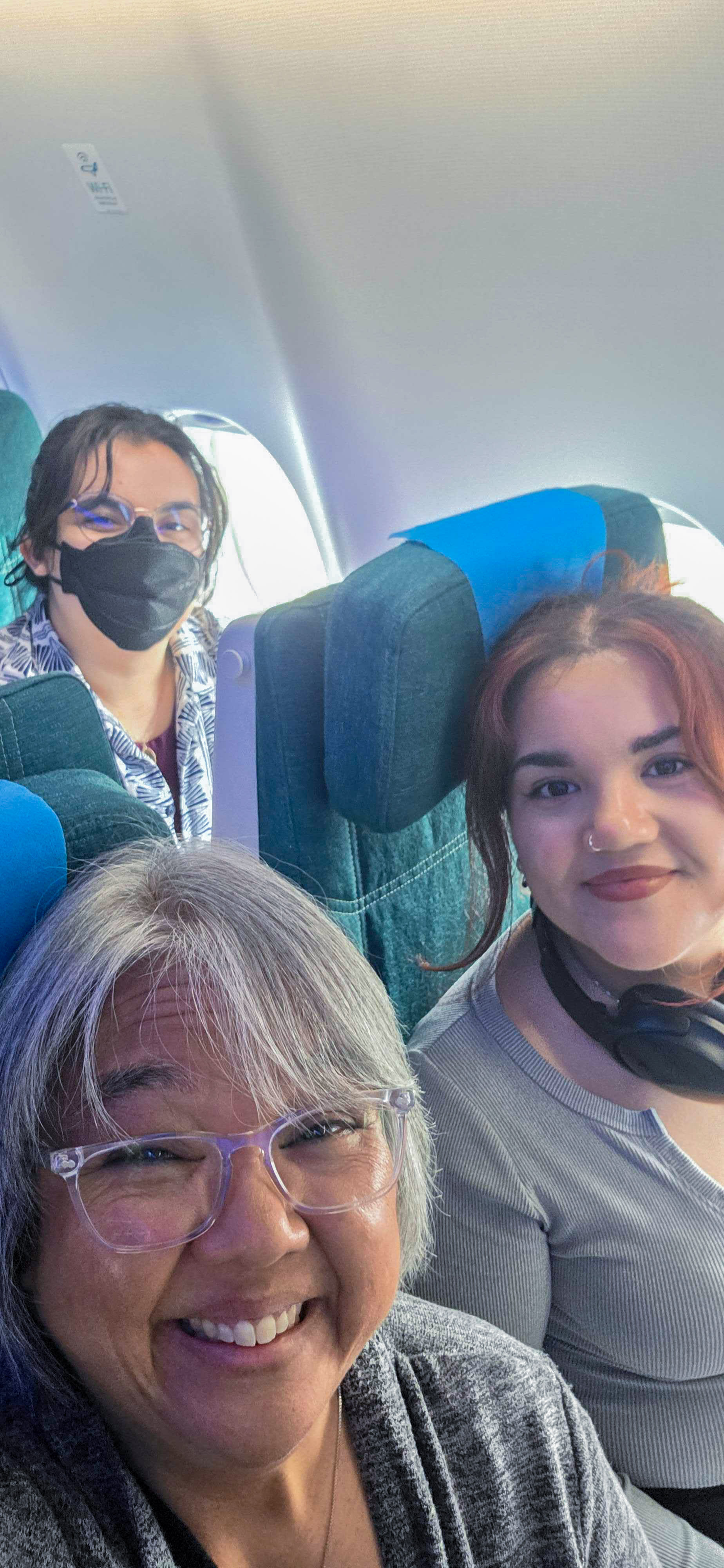
I also let the flight attendant know that I have hearing loss when I get on the plane. Many times they forget, but I've had some good experiences. Some have written down my connecting gate information or let me know about delays. Others have given me printed copies of their spiel about seatbelts and such. One flight attendant, Jason, went above and beyond to let me know when announcements were happening.
I also recommend letting your seatmate know that you're Deaf or Hard of Hearing, especially if you're in a middle or aisle seat. If I'm traveling in deaf mode with my voice off, I show them the message on my phone.
What do you look for when booking a hotel room?
Most of the time I'm traveling solo, so I think about how I'll know if there's an emergency while I'm sleeping. How will I wake up if I can't hear an alarm? How will I know if someone is at the door?
When I'm making a hotel reservation, I often search for "HEARING Accessible Rooms." These rooms may have communication features like visual fire alarms, alarm clocks with pillow shakers, and flashing doorbell notifications. Make sure the room has hearing accessibility features, since rooms designed for mobility access may not have the same equipment.
What do you do if one of those rooms isn’t available?
If there isn't a designated room available, another option is to ask for a "hotel access or ADA kit." You may have to describe this kit to hotel staff because they have no idea what you're talking about. I usually request one when making my reservation so they have time to find it. If they don't have one, kindly suggest that they contact one of their sister hotels to see if they have one available.
You'll want to make sure all the parts are there and the equipment is working. I can usually set it up myself, but you can always ask someone from hotel maintenance to help.
What other accessibility tools or precautions do you use during your hotel stay?
When I check in, I usually let hotel staff know that I'm Deaf when my cochlear implants are off at night. I ask them to make a note in their system in case of an emergency. I've also noticed that some hotel apps let you indicate during check-in if you may need help in an emergency. It's important to confirm the hotel's emergency procedures and make sure the room's accessible alerting equipment is working.
Personally, I use the Serene Innovations Mobile Phone Signaler (I call it "the cradle") with my phone. I use it for my alarm clock, weather alerts, and Sound Notifications, which can alert me to sounds like smoke detectors or door knocks. I keep my phone plugged in beside the bed so the cradle can light up and my pillow shaker can alert me.
Another accessibility tool in your room is closed captioning (CC) on the television. If you can't turn it on, contact the front desk for help. Sometimes it's as simple as pressing the right combination of buttons. Other times, you may need to request a different remote control from the hotel to access the CC menu.
What's your biggest piece of advice for Deaf and Hard of Hearing travelers?
Let people know that you are Deaf or Hard of Hearing and what communication strategies work best for you. That might mean asking someone to repeat themselves, using gestures or pointing, writing things down, or using an app. If you try to bluff your way through a conversation and the other person doesn't know you have hearing loss, it can get frustrating when communication breaks down.
Be proactive. Safe travels and have fun!


Minah Han is a marketing professional dedicated to advancing accessible communication solutions for the deaf and hard of hearing community. At InnoCaption, she leverages her expertise in digital marketing and storytelling to amplify the voices of individuals who rely on innovative technologies for everyday conversations. Minah is passionate about bridging the gap between technology and accessibility, helping to drive awareness and education around captioned calling solutions.
InnoCaption provides real-time captioning technology making phone calls easy and accessible for the deaf and hard of hearing community. Offered at no cost to individuals with hearing loss because we are certified by the FCC. InnoCaption is the only mobile app that offers real-time captioning of phone calls through live stenographers and automated speech recognition software. The choice is yours.