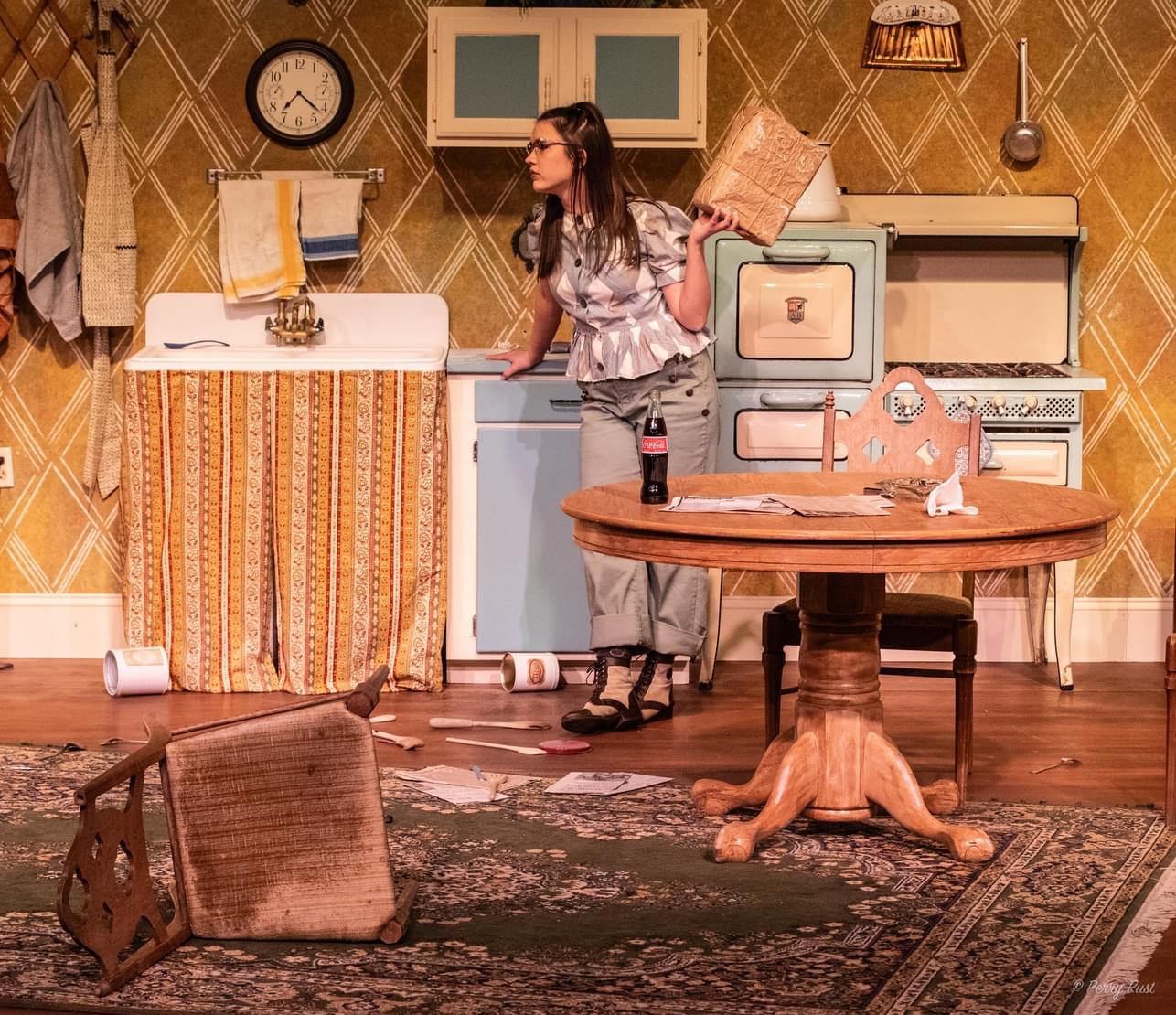
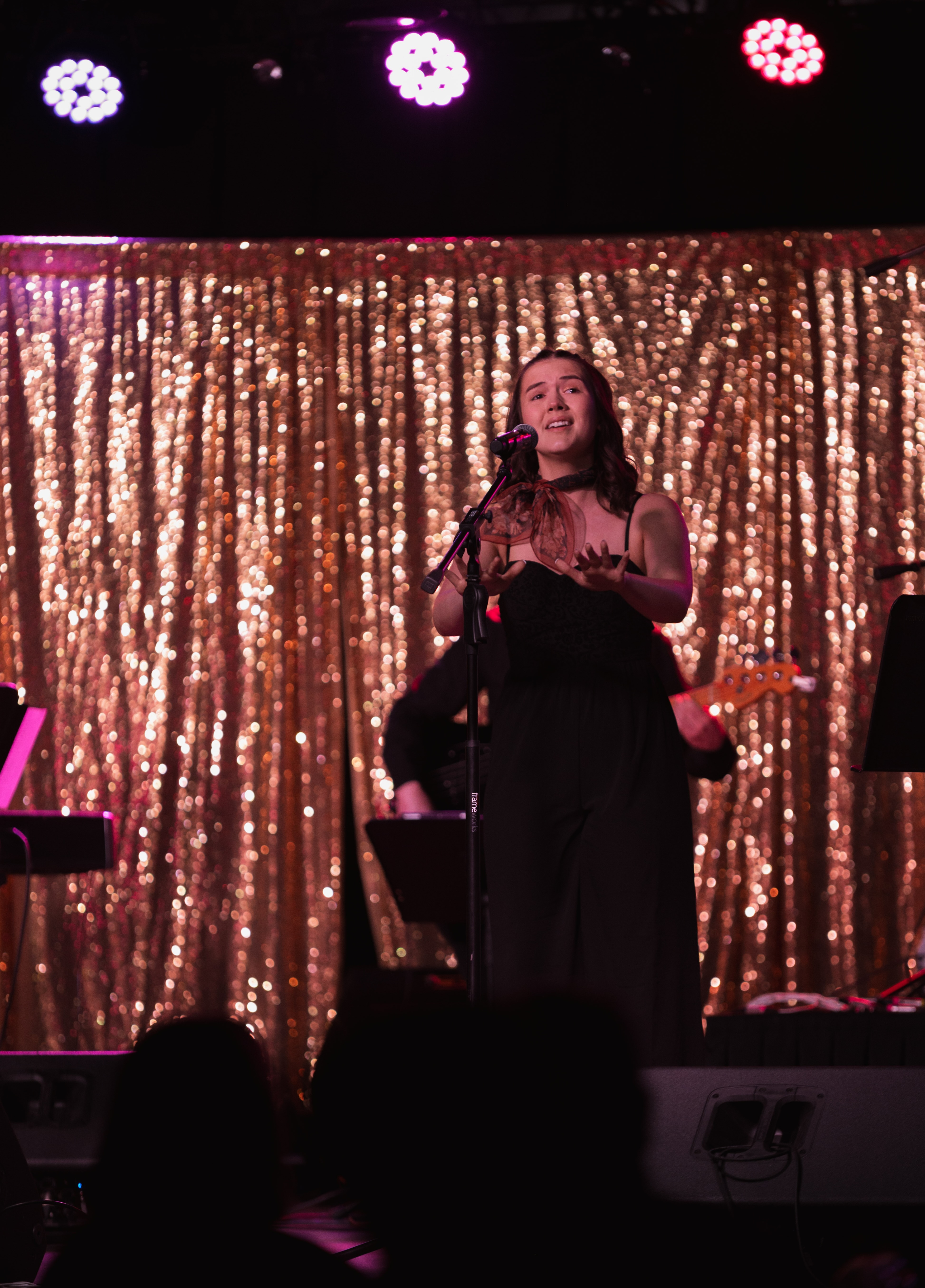
For Minneapolis-based actor and disability advocate Abigail Vogeler, planning a performance involves more than just memorizing lines. As someone who is both hard of hearing and neurodivergent, navigating the stage means a constant process of creative troubleshooting.
Having grown up without seeing relatable representation onstage, Abigail has dedicated her career to ensuring that the next generation gets to see themselves in the spotlight. From leading adaptive theatre classes for people with disabilities to building community as a content creator, she works to bridge the gap between standard industry practices and true accessibility.
In this Q&A, Abigail pulls back the curtain on the unique realities of being a performer with an invisible disability and the systemic changes needed to make the arts inclusive for everyone.
How did you get your start in the performing arts?
Performance has always been a part of my life. My mom sang in church choirs, and as soon as I could sing (which was when I was about three years old) she pushed me into a kids' choir. I was always singing around the house, so it felt natural. My mom also realized quickly that I needed to be in dance because I was constantly dressing up as a ballerina. As I got older, I discovered acting; I loved the feeling of "trying on" different characters and exploring their lives.
What does your work look like day to day, and where does accessibility factor in?
It’s a balancing act. I work full-time as a marketing specialist, so during a show, I’m often clocking in for my day job, heading to a five-hour rehearsal, and then finishing marketing work late at night. Accessibility is an ongoing collaboration between the production team and me. We just have to find creative ways to adapt to my invisible disabilities (hearing loss, ADHD, and autism). However, making accommodations is actually a lot easier than people think!
One barrier I’m pretty used to is adjusting microphones to fit my hearing aids: whether that’s using more tape or a forehead mic where the cord is woven through my hair instead of behind my ear. Another small accommodation I’ve had is a cue person off-stage to signal my entrances when I cannot hear the stage action clearly.
People ask if there’s a delay in that relay, but honestly, by opening night, you just feel the timing in your bones—you start to recognize sensory patterns, like the specific way people rush toward the wings right before your cue.
Was weaving your personal experience into your performances something you always planned, or did it evolve naturally?
It was an evolution. As a neurodivergent actor, I’ve realized that even if a character isn't written as autistic, they are because I’m the one playing them. I can’t strip my autism or my hearing loss away. I’ve made it a point to be vocal about it now—I include my disability in my cast bios because you never know who in the audience needs to see that representation.

Is there a specific moment with an audience member or colleague that has stayed with you?
I’ve had my share of profound experiences on stage, but the funny technical mishaps stay with me, too. A lot of hearing aids have feedback when you get too close to someone. I’ve been in the middle of a serious scene, perhaps when a character is literally dying, and I go in for a hug and my hearing aids start screeching. As an actor, you stay in character and ignore it, but those little "secondary" performances add a lot of humor to the job.
On a deeper level, I’ll never forget playing a deaf character for middle schoolers. A little girl came up afterward to show me her bright, sparkly blue hearing aid. We just pointed at our ears and smiled. That instant connection is why I do this.
What did that moment teach you about why it matters to see yourself represented on stage?
It reminded me that for a young person, seeing someone like them on stage validates their experience. It says, "You belong here, too." Representation isn't just about the story being told; it’s about the person telling it.
What are some of the barriers you've seen or experienced, whether for performers or for audiences?
In auditions, there’s a lot of "hidden" anxiety. In dance, you usually rotate lines so everyone gets time in the front. Because I need to be in the front to hear the choreographer, I have to "out" myself as disabled immediately so I don’t seem rude for staying put.
As an audience member, the barrier is often scheduling. I’ll look at a month-long run of a show and realize there are only two open-captioned performances. If those don't fit my schedule, I have to "spoil" the show for myself by reading the script beforehand just so I can follow along.
Where are you seeing progress, and where do you think there's still a long way to go?
The Twin Cities is a hotspot for progress; many theaters there get grants specifically for ASL interpreters. But there’s still a gap on the production side. My friend Lane (a deaf actor) and I once auditioned using sign language. I was nervous about messing up my signs, and he joked, "Girl, no one in the room is going to know if you’re signing gibberish because none of them know sign language." It hits on a real point: we need more representation in the writing and producing rooms so we aren't just a "special feature."
What does it actually look like when a theatre gets accessibility right? What are the signs?
It looks like options. It’s not just one night of captioning; it’s multiple performances with different accessible features. It’s theaters like the Guthrie that provide ASL interpretation and open captioning regularly. Or on Broadway, where you can check out a portable tablet that provides real-time lyrics and dialogue. When a theater gets it right, accessibility isn’t an afterthought—it’s woven into the schedule.
What do you hope someone reading this, whether they're a performer, a venue organizer, or just an audience member, takes away?
I want them to know that deaf and disabled stories are worth sharing. Inclusion isn't just a box to check; it’s a way to see the world differently.
To the younger performers out there: your voice matters. Find the people who are excited to collaborate with you. And if you aren't a performer, get involved anyway! Volunteer to paint sets or usher. Art is healing, it’s a great way to meet friends, and there is a place for everyone in the theater world.


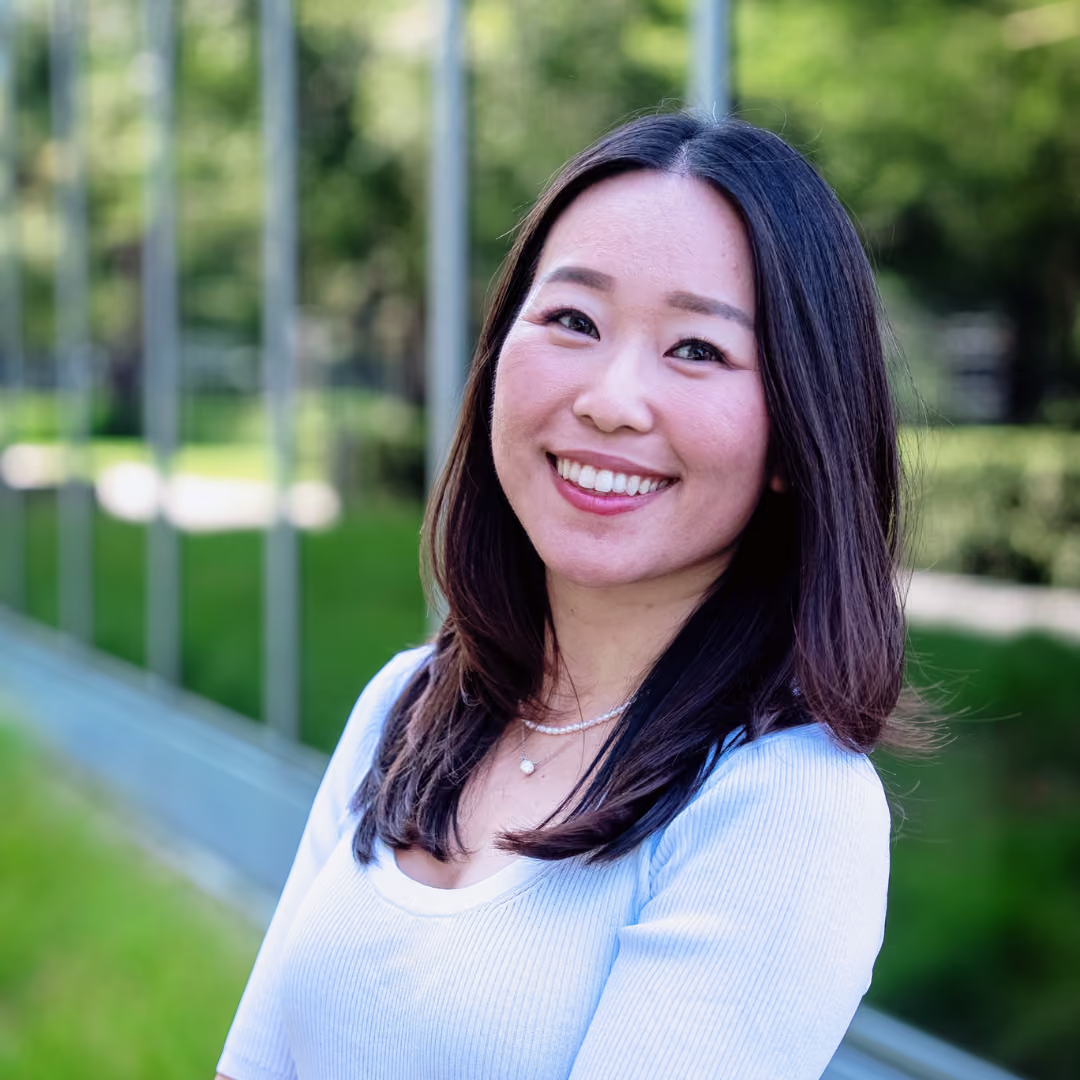
Minah Han is a marketing professional dedicated to advancing accessible communication solutions for the deaf and hard of hearing community. At InnoCaption, she leverages her expertise in digital marketing and storytelling to amplify the voices of individuals who rely on innovative technologies for everyday conversations. Minah is passionate about bridging the gap between technology and accessibility, helping to drive awareness and education around captioned calling solutions.
InnoCaption provides real-time captioning technology making phone calls easy and accessible for the deaf and hard of hearing community. Offered at no cost to individuals with hearing loss because we are certified by the FCC. InnoCaption is the only mobile app that offers real-time captioning of phone calls through live stenographers and automated speech recognition software. The choice is yours.


.avif)